What Color Are My Eyes? Identify Your Eye Color with AI
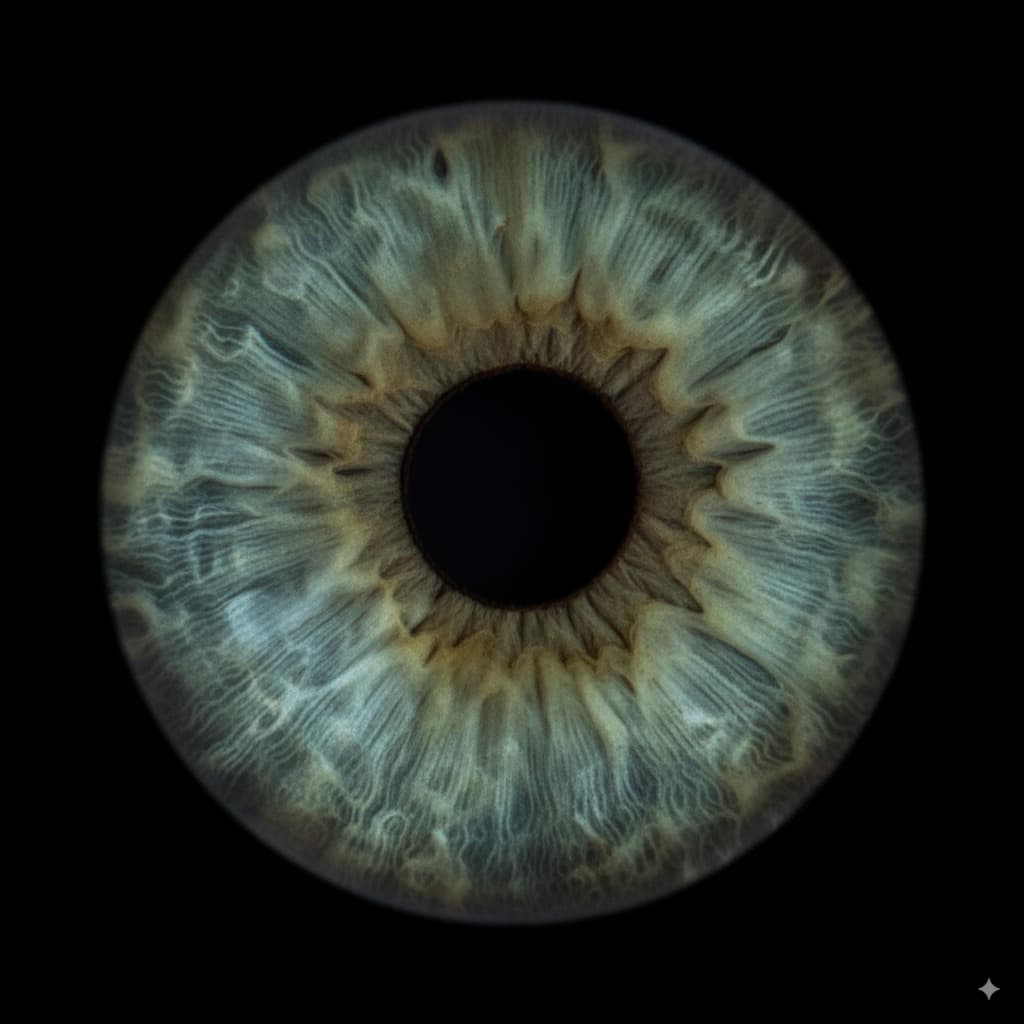
"I don't know what color my eyes are." Sound familiar? Eye color is more complicated than the tidy brown/blue/green/hazel categories most of us learn as kids — and the truth is that most people genuinely can't tell their own exact shade without help. The light is different every time you look in the mirror. Your phone's front camera lies. Your brain fills in what it expects to see.
This guide answers what color are my eyes? three different ways. First, with an AI photo analysis tool that gives you a precise answer in 30 seconds. Second, with a side-by-side eye color chart you can compare your eyes to in natural light. Third, by explaining the science of melanin, the iris, and the 16+ genes that actually determine your eye color. By the end, you'll know your exact eye color, how rare it is globally, and why your eyes might look different from one hour to the next.
Check Your Eye Color From a Photo
Upload a photo. We find your eyes and read the color for you. Free, no signup.
Your photo never leaves your device — the whole check runs in your browser.
Upload a photo of your face or your eye
Drag it here, or use a button below. A bright, sharp photo works best.
What Color Are My Eyes? The Short Answer
Almost everyone's eyes are brown, blue, hazel, or green. To tell which one you have, look at your iris in daylight next to a plain white card, and pick the color that stays the same in every light. If you see a mix — a ring of one color around the pupil and another color outside it — you likely have hazel eyes or central heterochromia.
How common is each color? In a 2014 survey by the American Academy of Ophthalmology (AAO survey), more than 2,000 Americans reported their eye color. The results, weighted to reflect the U.S. population:
| Eye color | Share of Americans (AAO survey) |
|---|---|
| Brown | 45% |
| Blue | 27% |
| Hazel | 18% |
| Green | 9% |
| A color not listed (such as gray or amber) | 1% |
Worldwide breakdowns are measured less precisely, so the table shows U.S. survey numbers. Globally, more than half of all people have brown eyes, and only about 2% have green eyes, according to the Cleveland Clinic.
How the AI Analyzer Estimates Your Eye Color
The analyzer reads the pixel colors inside your iris from a photo. Eye color comes mostly from melanin, the same pigment that colors skin and hair. A lot of melanin makes an iris look brown. Very little melanin lets light scatter inside the iris, which appears blue or gray. Amounts in between read as green, hazel, or amber. The tool compares your iris pixels to reference shades and picks the closest match, with a confidence score.
Honest limits: the result is an estimate, not a measurement. Dim light, warm indoor bulbs, camera white balance, and colored contacts can all skew it — a daylight photo with no contacts works best. It is not a medical device and cannot detect eye disease. If your eye color truly changes over weeks or months, see an ophthalmologist.
How to Tell What Color Your Eyes Are (3 Methods)
There are three reliable ways to identify your eye color. They range from the casual mirror test to a full AI scan. Use whichever fits the moment — they all work, with different levels of accuracy.
Method 1: The Mirror Test (DIY)
You can get a pretty good read on your eye color without any tool at all — but lighting is everything. Here's the protocol:
- Stand near a window in natural daylight. Artificial light (especially warm yellow bulbs) shifts the apparent color of your iris by 10–15 percent.
- Hold a plain white card or piece of paper next to your face. This acts as a color reference your brain can calibrate against — without it, our perception drifts toward the colors of nearby clothes and walls.
- Look at your iris in three different lighting conditions: bright direct sun, indirect light, and indoor lighting. Note what stays the same.
- Compare the most-consistent color to the chart below.
The mirror test works well for clearly-brown and clearly-blue eyes. It struggles with hazel, gray, amber, and any iris with multiple tones — which is roughly a third of all people.
Method 2: The Eye Color Chart
An eye color chart gives you a side-by-side reference. Each swatch below is calibrated to the average appearance of that color in natural daylight. Look at your eyes in a mirror, then compare to the closest match:
55–79% of people
8–10% of people
~5% of people
~2% of people
~5% of people
~3% of people
Charts work for general identification but they don't handle edge cases — central heterochromia (a ring of one color around the pupil with a different color outside), two-toned irises, or very pale gray-blue eyes that shift constantly.
Method 3: The AI Eye Color Identifier (Recommended)
The most accurate way to identify your eye color is also the fastest: take a photo, upload it to an AI scanner, and read the result. Our AI Eye Color Identifier analyzes the iris at the pixel level — extracting dominant colors, secondary tones, and confidence scores from a single photo.
Why an AI scanner beats the eyeball test:
- Pixel-level color analysis — it sees the actual RGB values in your iris, not what your brain expects to see.
- Lighting compensation — modern computer-vision models account for ambient color and white balance, so the result is the same in shade or sunlight.
- Sub-shade detection — it tells you not just "hazel" but specifically "green-hazel with amber inner ring," which a chart can't do.
- Rarity context — a good scanner pairs your result with global rarity statistics, so you know whether your color is common (brown) or unusual (true green).
The 6 Eye Colors Explained (With Rarity Percentages)
Most eye-color taxonomies recognize six main colors: brown, blue, hazel, green, amber, and gray. Each is produced by a different combination of melanin, light scattering, and iris structure — and each has a distinct global rarity. Here's the breakdown, ordered from most to least common.
55–79% of people · the most common eye color worldwide
Brown Eyes
Brown eyes contain the highest concentration of melanin of any eye color. That dense pigmentation absorbs most of the light that enters the iris, which is why brown eyes look almost black in some lighting and warmer in others.
The science
Two types of melanin matter here: eumelanin (which produces dark brown and black) and pheomelanin (which produces warmer red/yellow tones). Brown eyes are eumelanin-dominant.
Where you'll find them
Most common in Africa, East Asia, South Asia, the Middle East, and Southern Europe. Globally, more than half of all people have some shade of brown eyes.
Sub-shades
- Dark brown (almost black)
- Medium brown
- Light brown (often confused with hazel)
- Honey brown
Famous people with brown eyes
Beyoncé, Sandra Bullock, Mindy Kaling, Will Smith, Bruno Mars.
8–10% of people · all blue-eyed people share a single common ancestor
Blue Eyes
Blue eyes aren't actually blue. There is no blue pigment in a blue iris — it's a structural color, created by the way light scatters through the low-melanin stroma. This is the same physics that makes the sky look blue (the Tyndall effect).
The science
A 2008 study at the University of Copenhagen (Eiberg et al.) found that every blue-eyed person on Earth shares a single common ancestor — a genetic mutation in the HERC2 gene that arose 6,000–10,000 years ago and switches off melanin production in the iris.
Where you'll find them
Most common in Northern and Eastern Europe — particularly Scandinavia, the Baltic states, and Ireland. Rare in non-European populations.
Sub-shades
- Bright blue
- Deep blue / navy
- Steel blue (with gray tones)
- Pale ice blue
Famous people with blue eyes
Paul Newman, Cate Blanchett, Daniel Craig, Frank Sinatra, Taylor Swift.
~5% of people · the color most people mistake for green, brown, or something in between
Hazel Eyes
Hazel is the chameleon of eye colors. A true hazel iris has a brown ring around the pupil that fades into green, yellow, or amber toward the outer edge. The color appears to shift depending on light, clothing, and mood — but the underlying pigment doesn't actually change.
The science
Hazel eyes have a moderate amount of melanin distributed unevenly across the iris. The combination of eumelanin (brown) in the inner ring and lipochrome (yellow pigment) plus Tyndall scattering in the outer ring creates the multi-tonal appearance.
Where you'll find them
Most common in Europe (especially Spain, Italy, France) and Western Asia. Approximately 5% of the global population — but reported rates vary because people frequently confuse hazel with light brown or green.
Sub-shades
- Brown-hazel (brown ring dominant)
- Green-hazel (green outer ring)
- Blue-hazel (rare — central heterochromia variant)
- Dark hazel (deep brown with subtle green)
Famous people with hazel eyes
Tyra Banks, Jason Statham, Steve Carell, Penélope Cruz, Demi Moore.
~2% of people · the rarest of the commonly-recognized eye colors
Green Eyes
True green eyes are vanishingly rare. They sit between blue and hazel on the melanin scale — enough pigment to scatter less blue light than a blue iris, plus a touch of yellow lipochrome to nudge the perceived color into green.
The science
Green eyes have low-to-moderate melanin combined with a small amount of yellow lipochrome. The Tyndall effect (blue scattering) plus yellow pigment produces the perceived green — there's no actual green pigment in any human iris.
Where you'll find them
Most common in Ireland, Scotland, Iceland, and parts of Central and Northern Europe. Approximately 17% of people in Iceland have green eyes — the highest concentration anywhere. Globally, green is the rarest of the common colors.
Sub-shades
- Bright emerald green (rarest)
- Olive green
- Sea green (with blue tones)
- Forest green (with hazel tones)
Famous people with green eyes
Adele, Tom Cruise, Emma Stone, Scarlett Johansson, Chris Pine.
~5% of people · often misidentified as light brown or hazel
Amber Eyes
Amber eyes are a solid golden-coppery color, often described as resembling a wolf's eyes. Unlike hazel — which is multi-tonal — amber is uniform across the iris. The shade comes almost entirely from lipochrome (yellow pigment) without the green tones of hazel.
The science
Amber eyes have high lipochrome (pheomelanin) content with minimal eumelanin. The lack of brown pigment is what differentiates amber from light brown, and the absence of Tyndall blue scattering differentiates it from hazel or green.
Where you'll find them
Most common in South America, some parts of Asia (especially the Caucasus region), and parts of Southern Europe. Globally rare — most often misclassified as light brown.
Sub-shades
- Light amber (golden)
- Copper amber (reddish)
- Dark amber (close to light brown)
Famous people with amber eyes
Nicole Richie, Jennifer Garner (very light hazel/amber), Darren Criss.
~3% of people · the most misclassified — almost always called blue
Gray Eyes
Gray eyes have even less melanin than blue eyes — so little that you can sometimes see the iris stroma's collagen fibers, which scatter all wavelengths of light evenly to produce gray. They can appear almost silver in bright daylight and shift toward blue or green under certain lighting.
The science
Gray irises contain almost no melanin in the front layer and have a particularly thick stroma with dense collagen deposits. The collagen scatters light uniformly across the visible spectrum, producing gray rather than blue (which scatters short wavelengths).
Where you'll find them
Most common in Northern and Eastern Europe — particularly Russia, the Baltic states, Iceland, and northern Germany. Also found in some North African populations.
Sub-shades
- Steel gray (with blue undertones)
- Smoky gray (warm gray)
- Silver gray (very pale, almost reflective)
Famous people with gray eyes
Henry Cavill (heterochromia, gray-blue), Kanye West, Heather Graham.
Rare and Unusual Eye Colors
Beyond the six main colors, some people have iris variations that are genuinely rare — and others are mostly myth. Here's the truth on each.
Heterochromia: Two Different Colored Eyes
Heterochromia is the technical term for having different-colored eyes. It occurs in less than 1% of the global population and comes in three flavors:
- Complete heterochromia — one iris is entirely one color, the other iris is a completely different color. Think one blue eye and one brown eye.
- Sectoral heterochromia — one iris contains a wedge or patch of a different color, like a quarter of the iris is brown and the rest is green.
- Central heterochromia — both irises have a ring of one color around the pupil and a different color further out. This is the most common form, and many people searching "central heterochromia what color are my eyes" actually have it without realizing.
Heterochromia can be congenital (you were born with it) or acquired through eye injury, certain medications, or rare medical conditions like Horner's syndrome or Fuchs' uveitis. Famous people with heterochromia include Mila Kunis, Kate Bosworth, Henry Cavill, and Jane Seymour.
Violet and Red Eyes: Mostly Myth
You'll see "violet eyes" attributed to Elizabeth Taylor on countless websites. In reality, Taylor had very deep blue eyes that took on a violet cast under certain lighting and with the makeup palette of mid-century Hollywood. There's no such thing as a genuine violet iris in the absence of albinism.
True "red" or pink eyes occur only in people with albinism, where the near-total absence of melanin means the red of the blood vessels in the back of the eye becomes visible through the colorless iris. It's not a separate "eye color" — it's a medical condition.
Mixed and Two-Toned Eyes
If you're searching "what color are my eyes if they are blue and green", you most likely have one of three things: central heterochromia (different ring colors), hazel eyes (which always contain at least two pigments), or true gray eyes that shift toward blue or green depending on light.
The convention used by ophthalmologists is to name the eye after the outer ring of the iris when central heterochromia is present — so a brown-ring-with-green-outer iris is officially called green. The AI scanner gets this right automatically; the mirror test usually doesn't.
Why Your Eyes Look Different in Different Light
Here's a thing you've probably noticed: your eyes look different in selfies than in the mirror, and different again outdoors versus indoors. This is real — and there are four causes, none of which mean your eye color is actually changing.
- The Tyndall effect. For blue, green, and gray eyes, the perceived color depends on which wavelengths of light reach the iris and how they scatter. Blue-leaning eyes look more vivid in the morning when ambient light is cool, and warmer (more green or gray) in evening light.
- Pupil dilation. When your pupil expands (in low light, when you're emotional, or under certain medications), there's less visible iris — and the remaining iris is the outer ring, which is often a different shade than the inner ring. Many people's "mood eye color" is actually pupil-size-driven.
- Adjacent color reflection. Your iris reflects the colors of whatever you're wearing or what's near your face. A bright green shirt can make hazel eyes appear much greener. A blue background does the same for gray-blue eyes.
- White balance in cameras. Your phone's camera adjusts color temperature on the fly, often shifting everything warmer or cooler than reality. This is why photographs of your eyes can look completely different from what you see in a mirror.
True eye color change in an adult is rare and usually medical. If your eyes actually shift hue over weeks or months, get an ophthalmology check — conditions like Fuchs' uveitis, Horner's syndrome, or pigment dispersion can cause it.
What Determines Your Eye Color (The Science)
For decades, biology textbooks taught that eye color comes from a single gene with brown dominant over blue. That model is wrong. Modern genetics has identified at least 16 different genes that contribute to iris color, and the inheritance pattern is closer to a sliding scale than a simple dominant/recessive switch.
The Iris, Up Close
The iris is the colored ring around your pupil. It has two layers that matter for color:
- The stroma — a thick front layer of connective tissue, blood vessels, and melanocyte cells.
- The iris pigment epithelium — a thin back layer that contains dense pigment and prevents stray light from passing through.
The amount and type of pigment in the stroma is what produces what you see when you look in a mirror. The back layer is always dark in everyone — what changes between people is the front.
Two Kinds of Pigment
Iris color comes from two types of pigment plus one optical effect:
- Eumelanin — produces brown and black. Dense in brown eyes, present in moderate amounts in hazel, minimal in green and blue.
- Lipochrome (pheomelanin) — produces yellow and reddish tones. Responsible for the amber and yellow tones in amber, hazel, and green eyes.
- Tyndall scattering — not a pigment, but a light effect. When there's very little melanin in the stroma, short-wavelength light (blue) scatters back to the viewer while longer wavelengths pass through. This is the same effect that makes the sky blue, and it's why every blue and gray iris is technically a structural color rather than a pigmented one.
The Genetics: Sixteen Genes, Not One
The headline gene is OCA2, which controls melanin production in the iris. But it's far from alone. A 2021 meta-analysis by Simcoe et al. identified 124 independent genetic variants across 16 gene regions that affect eye color, including HERC2, SLC24A4, TYR, TYRP1, IRF4, and others. The combination of which variants you inherit from each parent — not a simple dominant/recessive pairing — produces your specific shade.
This is why two brown-eyed parents can absolutely have a blue-eyed child. If both parents carry recessive variants on several of those 16 genes, around a quarter of their children will be blue-eyed. The same logic explains why siblings often have noticeably different eye colors despite sharing both parents.
The Blue-Eye Origin Story
Every blue-eyed person alive today shares a single common ancestor. A 2008 study by Eiberg et al. at the University of Copenhagen traced every case of blue eyes back to a genetic mutation that arose somewhere between 6,000 and 10,000 years ago in a single individual. That mutation, in the HERC2 gene, switches off melanin production in the iris. Before that mutation occurred, all humans had brown eyes.
What Color Will My Baby's Eyes Be?
Newborns' eyes are notoriously deceptive. Many babies of European descent are born with gray-blue eyes that change to their final color over the first year of life, as the melanocytes in the iris stroma begin producing pigment.
The general timeline:
- Birth to 3 months: color is unstable and generally pale. Most darker shades (brown, hazel) won't be visible yet.
- 3 to 6 months: melanin production ramps up, and the iris starts to settle. By six months, most babies' eye color is close to its final state.
- 9 to 12 months: the dominant color is usually stable. Subtle shifts can still happen.
- By age 3: very few children's eye color continues to change after this age. Anything different from here is probably a perception or lighting effect.
If you want a rough probability for what your child's final eye color will be, look at both parents and all four grandparents. The wider the genetic sample, the better the prediction — since 16 genes influence iris color, having more data points from the family tree gives you a more accurate expected range.
Eye Color Myths, Debunked
Eye color attracts more bad science than almost any other physical trait. Here are the myths we hear most often, and what the actual evidence says.
Myth: Eye color predicts personality
You'll find thousands of articles claiming brown-eyed people are "more trustworthy" or blue-eyed people are "more competitive." None of the studies behind these claims have replicated reliably. The handful that show small statistical correlations are confounded by cultural expectations, not biology. Eye color is a melanin level — it has no causal connection to your temperament, IQ, or how you behave in relationships.
Myth: Brown is dominant, blue is recessive — that's all you need to know
This was the model in 1950s biology textbooks, and it's still taught in some high schools. It's wrong. Modern genetics has identified 16+ genes involved in iris coloration, and the inheritance pattern is polygenic — closer to height or skin tone than to a simple Mendelian trait. Two brown-eyed parents can absolutely have blue, green, or hazel children.
Myth: You can change your real eye color with sun exposure or honey
TikTok and Reddit cycle this one every few months. The claim: sit in the sun / drop honey in your eyes / drink a special juice and your iris will lighten. None of this works. The melanocytes in your iris stroma stop changing pigment production in early childhood. Topical honey is dangerous (eye infections, corneal damage) and doesn't penetrate the cornea anyway. The only real ways to change adult eye color are cosmetic contact lenses or surgical procedures — and the latter (iris implants, laser depigmentation) carry serious risk of glaucoma and blindness.
Myth: Heterochromia is a sign of disease
Most cases of heterochromia are congenital, benign, and have no health consequences. A small subset is acquired through injury or rare medical conditions — but having two different-colored eyes from birth is almost always just genetics doing its thing. It's not a warning sign.
Myth: Eye color tells you your ethnic background precisely
Eye color correlates with geographic ancestry on average — blue eyes are more common in Northern Europe, brown in Africa — but the variance within any population is huge. You can't look at someone's eye color and reliably guess their heritage. Plenty of South Indians have green eyes; plenty of Northern Europeans have brown.
Beyond Color: Your Unique Iris Pattern
Your iris isn't just a colored disc. It has texture — ridges, crypts, furrows, and pigment spots that combine to form a pattern as unique to you as a fingerprint. Identical twins share DNA but have visibly different iris patterns, which is why iris scanning is used in some of the highest-security biometric systems.
The features most visible in an up-close iris photo:
- Crypts (Fuchs' crypts) — small diamond-shaped openings in the iris stroma, scattered around the iris like pinpricks. People with more crypts often appear more "textured."
- Furrows — concentric ring-like lines that form when the pupil contracts. More furrows generally mean more flexibility in pupil response.
- Pigment spots (Wolfflin nodules) — small yellow-brown dots scattered across blue and gray irises. Statistically rare and often inherited.
- Limbal rings — the dark border around the outer edge of the iris. People with more prominent limbal rings are often perceived as more attractive in studies — ring visibility decreases with age.
Our AI Eye Color Identifier generates a unique identifier code based on your iris pattern — so even if your eye color is "common brown," the code for your specific iris is one of a kind.
Try the Free AI Eye Color Identifier
If you've read this far, you probably want a real answer for your own eyes. Our AI Eye Color Identifier is the fastest and most precise way to find out — and it's free, with no login or signup required.
Here's what you get from one photo:
- Your dominant iris color, with confidence percentage
- Any secondary tones (e.g. "green-hazel with brown inner ring")
- Global rarity percentage — how unusual your color is worldwide
- Geographic distribution — where your color is most common
- A unique iris-pattern identifier code, like a fingerprint for your eye
- Optional iris photo enhancement for high-detail, share-ready results
Frequently Asked Questions
How can I find my exact eye color?
The most accurate way is using an AI eye color identifier that analyzes pixel-level colors in a high-resolution iris photo. Free tools like our AI Eye Color Identifier take 30 seconds and give you both your dominant color and any secondary tones, plus a rarity percentage. Manual methods — a mirror in natural daylight next to a white card for color calibration — work but are less precise.
What color are my eyes test online free?
Yes — you can take a free eye color test online without signup. Our Eye Color Check is free, no login required, works on iOS, Android, and desktop, and gives you a confidence score plus rarity percentage in under a minute.
How do I know what color my eyes really are?
Take a photo of your eye in natural daylight, then either compare it to an eye color chart or run it through an AI eye color identifier. Your "real" eye color is the one that's consistent across most lighting conditions. Variations under different lights are normal and don't change your underlying iris pigment.
What is the rarest eye color?
Green eyes are the rarest of the commonly-recognized eye colors, occurring in only about 2% of the world's population. Amber and gray are also relatively rare, each around 3–5%. Heterochromia — having two different colored eyes — occurs in less than 1% of people. Violet eyes are essentially a myth; the closest real cases are very pale blue eyes in people with albinism. You can calculate your own rarity with our Eye Color Rarity Calculator.
What's the most common eye color?
Brown is by far the most common eye color globally, with 55–79% of people having brown eyes. It's especially dominant in Africa, Asia, the Middle East, and Southern Europe. Brown eyes have the highest concentration of melanin in the iris of any color.
Can eye color change?
Baby eye color often changes during the first year as melanin develops. In adults, eye color appears to shift due to lighting, mood (pupil size), and clothing reflections — but the underlying iris pigment is stable. Sudden, real color change in an adult can indicate a medical condition (such as Horner's syndrome or Fuchs' uveitis) and should be checked by an ophthalmologist.
What is the 30-30-30 eye rule?
The 30-30-30 rule is for eye strain prevention, not eye color identification. Every 30 minutes of screen time, look at something 30 feet away for 30 seconds. It's commonly searched alongside eye color questions but is unrelated. For identifying your eye color, use natural lighting and an AI scanner or color chart.
Can two brown-eyed parents have a blue-eyed child?
Yes. Eye color is determined by at least 16 different genes, not just one, so brown-eyed parents who both carry recessive variants can produce blue, green, or hazel children — roughly a 25% probability when both are heterozygous for the dominant brown variants.
Sources & Further Reading
- Simcoe, M. et al. (2021). Genome-wide association study in almost 195,000 individuals identifies 50 previously unidentified genetic loci for eye color. Science Advances.
- Eiberg, H. et al. (2008). Blue eye color in humans may be caused by a perfectly associated founder mutation in a regulatory element located within the HERC2 gene inhibiting OCA2 expression. Human Genetics.
- Cleveland Clinic. (2024). Eye Colors: Hazel, Green, Amber, Blue, Grey & Brown.
- MedlinePlus Genetics. Is eye color determined by genetics? U.S. National Library of Medicine.
- American Academy of Ophthalmology. Iris Anatomy and Function.
Written by the MyEye - AI Eye Scanner & Iris Analyzer Team. This article is for educational and entertainment purposes only and does not constitute medical advice. If you notice a sudden change in your eye color, consult a qualified ophthalmologist.
Last updated: May 13, 2026.