Violet & Purple Eyes: Are They Real, and How Rare Are They?
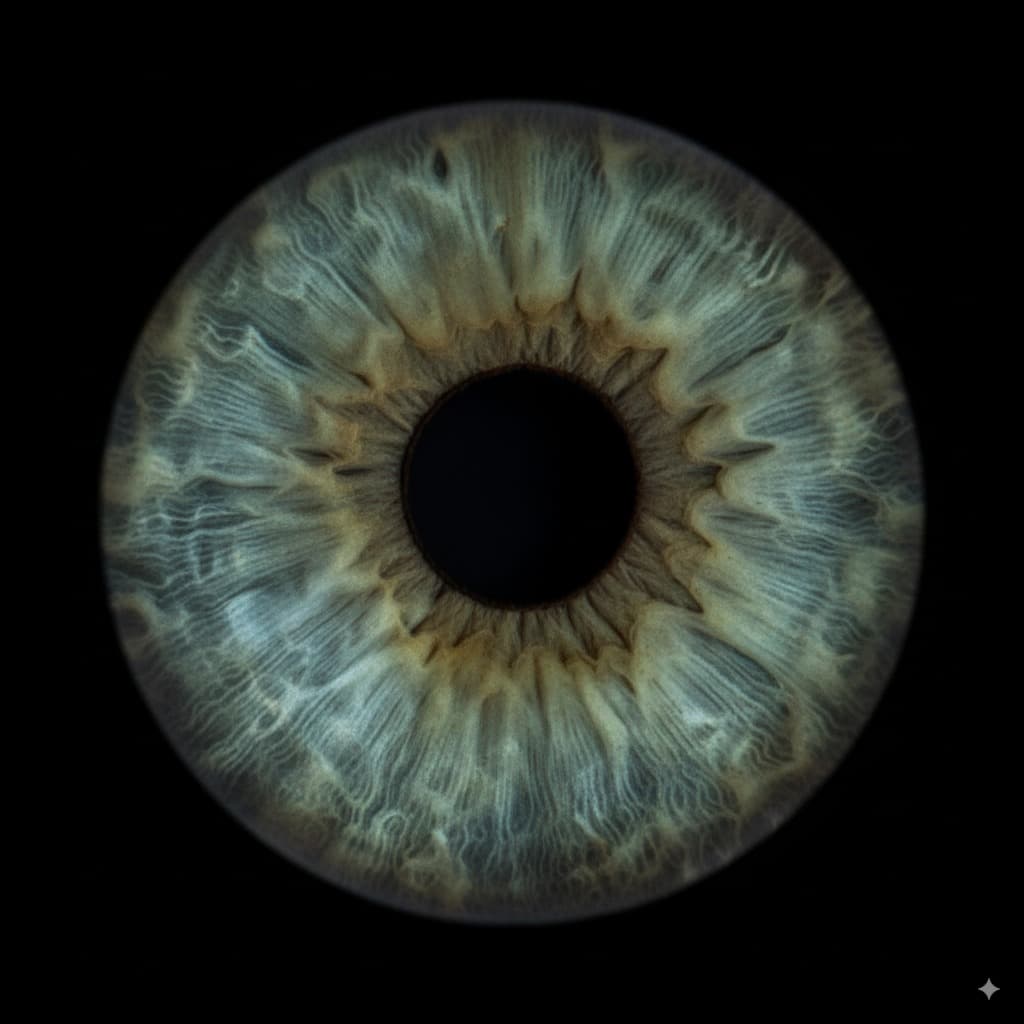
Violet and purple eyes are the most mythologized eye color on the internet — the subject of viral posts, a famous fake genetic condition, and one of Hollywood's most repeated beauty legends. So here is the honest answer up front: there is no purple pigment in the human eye. Almost every "violet eye" is really a very pale blue or gray eye whose structural blue is mixing with warm, reddish light. But "almost" is doing real work in that sentence — there is one genuine biological route to a violet cast, and it's worth understanding. This guide separates the science from the myth: why blue eyes can look purple, the role of albinism, the truth about Elizabeth Taylor, the Alexandria's Genesis hoax, and how to get the look safely.
Are Violet Eyes Real?
To answer this properly you have to separate two questions that usually get mashed together: can a human eye look violet? and is there a violet pigment? The answer to the first is yes; the answer to the second is no — and that distinction is the whole story.
Human eye color comes from just one pigment, melanin, which is brown-black. There is no blue pigment, no green pigment, and no violet pigment anywhere in the iris. Brown eyes have a lot of melanin; blue eyes have very little, and their color is structural — created by the way light scatters in the nearly colorless front layer of the iris (the same physics that makes the sky blue). Green and hazel are a small amount of melanin layered over that structural blue. So the entire palette of human eyes is built from one dark pigment plus a light-scattering trick. Violet simply isn't one of the outputs that system produces on its own.
What can happen is that a very pale, low-melanin iris — the kind that would normally read as pale blue or gray — gets combined with a reddish or pink input. Add a warm light source, a lilac shirt, red undertones in the skin around the eye, or violet-leaning makeup, and the cool structural blue and the warm red blend, in the eye of the observer, into lavender or violet. It's the same reason a white wall looks warm under a sunset and cool under a fluorescent tube. The eye didn't change; the light did.
Why Blue Eyes Can Look Purple
The mechanism behind almost every real-life "violet eye" is worth spelling out, because once you see it you'll spot it everywhere. A pale blue iris scatters short-wavelength (blue) light back toward the viewer. Violet sits right next to blue at the end of the visible spectrum, so a blue iris is already producing light very close to violet. All it takes to tip the balance is a small amount of long-wavelength (red) light entering the mix:
- Warm or golden-hour lighting adds red and orange, which combine with the iris's blue to push it toward violet.
- Clothing and makeup in purple, lilac, pink, or burgundy reflect their own color into the eye and reinforce the lavender read — a trick stylists and photographers use deliberately.
- The skin and blood vessels around a very pale iris can lend a faint pink that shifts the apparent hue.
- Camera sensors and film render pale blues and the red end of the spectrum differently from the human eye, which is why "violet eyes" are far more common in photos than in person.
This is not a defect or an illusion in the negative sense — it's a genuine, repeatable optical effect, the same family of phenomenon that makes gray eyes seem to change color through the day. If you have pale blue eyes and people occasionally tell you they look purple, this is why. Your base color, though, is blue.
The One Real Exception: Albinism
There is exactly one way a human eye can take on a genuine violet-to-reddish color for a biological reason rather than a lighting one, and that is albinism. In some forms of albinism the iris contains so little melanin that it is nearly translucent. When that happens, light can pass through and reflect off the blood vessels of the retina at the back of the eye — the same reason a camera flash can make pupils glow red. That reddish reflection, seen through the faint bluish scatter of an almost pigment-free iris, can produce a pinkish, violet, or reddish-purple appearance.
A few things to be clear about here. Most people with albinism actually have very pale blue or gray eyes, not violet — the vivid red-violet look is the exception, not the rule, and often depends on lighting. Albinism is also a medical condition, not a beauty trait: it commonly comes with significant vision problems, extreme light sensitivity, and a lifelong need for sun protection, because melanin is what shields the eyes and skin from UV. Albinism is rare — affecting roughly 1 in 17,000 to 1 in 20,000 people worldwide across all its types — which is part of why a truly, biologically violet eye is one of the rarest sights in human color at all.
How Rare Are Purple Eyes?
Rarer than any color that actually makes the charts. For context, here's roughly how the natural palette breaks down worldwide:
- Brown — around 70–79% of people, the global default.
- Blue — roughly 8–10%.
- Hazel and amber — about 5% each.
- Green — around 2%, the rarest of the common colors.
- Gray — under 1%.
- Violet / red — no measured percentage, because it isn't a true pigment category and appears only via albinism or specific lighting.
That last line is the honest answer to "how rare are purple eyes": rare enough that statisticians don't give it a number. When you see a striking pair of purple eyes on social media, the odds overwhelmingly favor colored contact lenses, photo editing, or lighting over a natural violet iris. For where every genuine color lands, see our full rarest eye color ranking and the eye color chart.
The Elizabeth Taylor Myth
No discussion of violet eyes gets far without Elizabeth Taylor, routinely described as the woman with natural violet eyes. The reality is a perfect illustration of everything above: Taylor had blue eyes — a deep, vivid blue that photographed as violet under the right conditions. Combine that blue with the dark eyeliner she famously wore, lilac and blue wardrobe choices, and the warm studio lighting and film stock of mid-century Hollywood, and her eyes read as lavender on screen and in publicity stills. It's the blue-plus-red effect, executed by professional cinematographers who knew exactly what they were doing.
Taylor did have a genuine genetic peculiarity, which probably helped the legend along: a condition called distichiasis, a double row of eyelashes, generally linked to a mutation in the FOXC2 gene. That gave her an unusually lush lash line — but it affects eyelashes, not iris color. Her eye color itself was blue. The "violet eyes" were a triumph of lighting, styling, and a memorable face, not a unique pigment no one else has. She's one of several famous cases we unpack in our guide to celebrity eye colors.
Alexandria's Genesis: The Purple-Eye Hoax
If you search purple eyes for long you'll run into Alexandria's Genesis (sometimes "Origin"), a story about a genetic mutation that supposedly gives people purple eyes at birth, flawless pale skin, no body hair, a perfect figure, immunity to illness, and other superhuman perks. It's a complete internet hoax. It began as a forum and creepypasta-style story in the mid-2000s and has been copied ever since; there is no such condition in any medical or genetic literature, and the biology it describes is impossible.
It's harmless as a piece of internet folklore, but it's the single biggest source of purple-eye misinformation, so it's worth naming plainly: nobody is born with purple eyes because of Alexandria's Genesis, because Alexandria's Genesis is not real.
How to Get Purple or Violet Eyes (Safely)
If you want the look, there are honest ways to get it and dangerous ways to avoid. The safe route:
- Colored contact lenses are the only real way to make brown or dark eyes appear violet. Crucially, even non-corrective "cosmetic" lenses are medical devices: get them prescribed and fitted by an eye-care professional. Lenses bought from a costume shop or random online seller, worn without a fitting, are a leading cause of corneal scratches and eye infections that can permanently harm vision.
- Styling, if you already have pale eyes. If your eyes are naturally pale blue or gray, you can coax out a violet cast with lilac, purple, or warm-toned clothing, purple-family makeup, and warm lighting — no lenses, no risk.
- Photo editing is how most online "purple eyes" are made. There's nothing wrong with it for fun — just know that's what you're usually looking at.
What to steer clear of: permanent eye-color procedures marketed online — iris implants, laser depigmentation, and keratopigmentation (corneal tattooing). None are used to create violet specifically, and all carry real risks including glaucoma, inflammation, light sensitivity, and vision loss. We cover them in detail in can you change your eye color?
Violet Eyes in Culture & Symbolism
Because they hover between real and impossible, violet eyes carry more symbolic weight than almost any other color. In fiction they mark a character as otherworldly, magical, or royal — from fantasy heroines to comic-book characters, purple eyes are visual shorthand for "not quite human." That association is exactly why the Alexandria's Genesis myth spread so well: it told people that a fantasy trait could be real.
As with every eye color, it's worth saying clearly that these meanings are cultural, not scientific — eye color does not shape personality, health, or destiny. What's genuinely fascinating about violet eyes is the physics: the fact that the rarest-looking color humans have isn't a pigment at all, but a conversation between a nearly colorless iris and the light around it.
Frequently Asked Questions
Are violet or purple eyes real?
Not as a pigment. There is no purple or violet pigment in the human iris. Nearly all "violet eyes" are very pale blue or gray eyes whose structural blue mixes with warm, reddish light, makeup, or clothing to read as lavender. The one genuine biological route is albinism, where an almost pigment-free iris lets light reflect off blood vessels for a reddish-violet cast.
How rare are purple eyes?
Rarer than green (~2%) or gray (under 1%) — so rare it isn't even tracked as its own category in surveys, so no reliable percentage exists. A naturally violet-appearing eye needs either an unusually pale blue iris in the right light, or albinism (about 1 in 17,000–20,000 people). Most purple eyes online are contacts, editing, or lighting.
Did Elizabeth Taylor really have violet eyes?
She had blue eyes that photographed as violet with the right lighting, dark eyeliner, and lilac/blue clothing — not a unique violet pigment. She did have a real genetic quirk (a double row of eyelashes, likely from a FOXC2 mutation), but that affects eyelashes, not iris color.
Is Alexandria's Genesis real?
No. Alexandria's Genesis is an internet hoax that claims a mutation gives people purple eyes and superhuman traits. It has no basis in genetics or medicine and appears in no medical literature. It's the main source of purple-eye misinformation online.
How can I get purple eyes safely?
Colored contact lenses are the only safe way — and only ones prescribed and fitted by an eye-care professional, since even cosmetic lenses are medical devices that can damage your eyes if bought without a fitting. If your eyes are already pale blue or gray, lilac clothing, purple makeup, and warm lighting can bring out a violet cast with no lenses at all. Avoid permanent procedures like iris implants and laser depigmentation.
Sources & Further Reading
- Cleveland Clinic. (2024). Eye Colors: Hazel, Green, Amber, Blue, Grey & Brown.
- National Organization for Albinism and Hypopigmentation (NOAH). What Is Albinism?
- MedlinePlus Genetics. Is eye color determined by genetics? U.S. National Library of Medicine.
- American Academy of Ophthalmology. Are Colored Contact Lenses Safe?
Related Reading
- Blue Eyes: How Rare They Are, the Genetics & Why There's No Blue Pigment
- Gray Eyes: How Rare They Are & Why They Aren't Just Blue
- The Rarest Eye Color: 2026 Definitive Ranked Guide
- Can You Change Your Eye Color? Surgery, Contacts & Myths
- Eye Color Chart: Every Color, Its Shades & How Rare It Is
- Eye Color Genetics: What Actually Determines Your Eye Color
- AI Eye Color Identifier (the tool)
Written by the MyEye - AI Eye Scanner & Iris Analyzer Team. For educational and entertainment purposes only. Not medical advice. Population percentages cited are global averages drawn from peer-reviewed studies and may vary by region and methodology.
Last updated: July 15, 2026.