Blue Eyes: How Rare They Are, the Genetics & Why There's No Blue Pigment
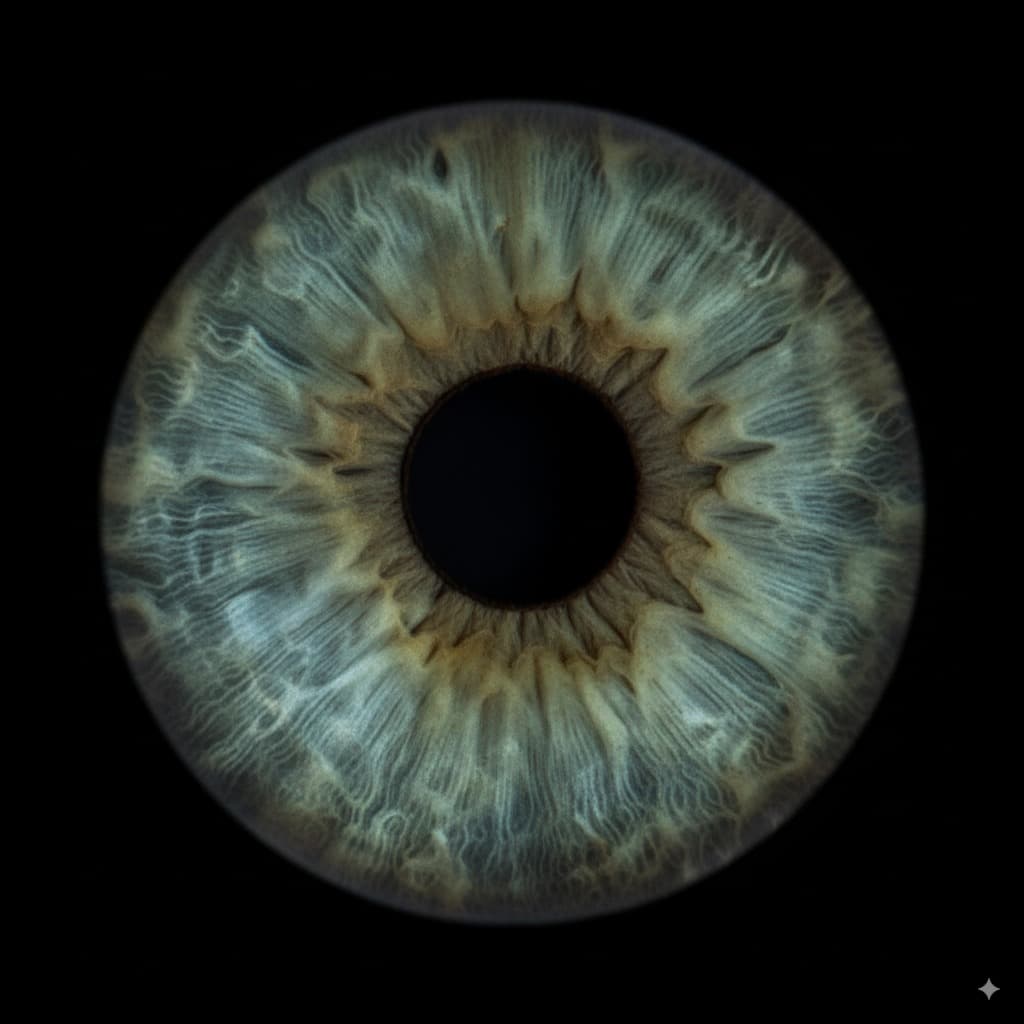
Blue eyes feel iconic, but they are not actually blue — and they are rarer than most people assume. Only about 8–10% of people worldwide have them, and that share has been quietly shrinking for generations. Here is the fact that stops people cold: there is no blue pigment anywhere in a blue eye. The color is pure physics, the same trick of light that paints the sky. This guide explains how rare blue eyes really are, the genetics behind them, why they look blue when no blue pigment exists, the remarkable finding that nearly every blue-eyed person alive shares a single ancestor, and why so many babies are born blue-eyed and then change.
What Are Blue Eyes?
Blue eyes are the lowest-melanin iris color on the everyday spectrum. A true blue iris carries only a trace of pigment in its front layer, which is exactly why it reads blue — the less melanin there is, the more the eye leans toward pure blue. Within that, blue ranges widely: bright ice-blue, deep sapphire, steely blue-gray, and blue-green that edges toward the next color along are all called blue.
The single most important fact about blue eyes is that there is no blue pigment anywhere in the human iris. Eyes only ever contain two kinds of pigment: melanin (brown to black) and lipochrome (a yellowish pigment). Blue is not a pigment you have — it is a color your eye perceives when a very small amount of melanin combines with the way light scatters inside the iris. That is why blue sits at the bottom of the pigment ladder: add a little melanin and you get gray or green; add a lot and you get brown. We will unpack exactly how the scattering works below.
How Rare Are Blue Eyes?
Blue eyes occur in approximately 8–10% of the world's population. That makes them the second most common eye color after brown, but still genuinely uncommon on a global scale — roughly nine in ten people on Earth do not have them. Here is where blue sits relative to the other major eye colors:
| Eye color | Approx. global share | Rarity |
|---|---|---|
| Brown | 55–79% | Most common |
| Blue | 8–10% | Common (2nd) |
| Hazel | ~5% | Uncommon |
| Amber | ~5% | Uncommon |
| Gray | ~3% | Rare |
| Green | ~2% | Rarest (non-medical) |
As with every eye color, that global average hides enormous regional variation — and blue is the most extreme case of all. Blue is overwhelmingly a Northern and Eastern European trait, and in its heartlands it is not rare in the slightest; it is the default. The map below shows just how sharply the numbers swing by region:
| Region / country | Approx. share with blue eyes |
|---|---|
| Estonia | ~89% |
| Finland | ~89% |
| Baltic states (Latvia, Lithuania) | Very high (80%+) |
| Scandinavia (Sweden, Norway, Denmark) | Very high |
| Ireland & Scotland | High |
| Netherlands & Northern Germany | High |
| United States (all backgrounds) | ~16–17% |
| Southern Europe | Low–moderate |
| Africa, Asia, Middle East | Very rare |
The takeaway is that "how rare are blue eyes" has no single answer — it depends entirely on where you look. To a Finn, blue eyes are unremarkable; to most of the world's population, they are a genuine rarity. For the full ranking of every eye color by rarity, see our rarest eye color guide.
Why Blue Eyes Look Blue (There's No Blue Pigment)
If there is no blue pigment, where does the color come from? The answer is one of the most elegant facts in all of human biology: blue eyes are a structural color, produced by light itself rather than by any pigment.
Here is what actually happens. The front layer of a blue iris contains very little melanin. When white light enters that nearly-clear tissue, it hits countless tiny structures and gets scattered. Crucially, the scattering is not even-handed: the shorter, bluer wavelengths of light bounce back toward you far more than the longer red ones. This is called Rayleigh scattering (closely related to the Tyndall effect you may see referenced). With so little pigment to absorb the light, what makes it back out of the eye is dominated by blue — and so the iris looks blue.
You already know this effect intimately, because it is the exact same physics that makes the daytime sky blue. The sky is not painted blue and holds no blue pigment; air molecules scatter the sun's shorter blue wavelengths across the whole sky. A blue eye is doing the same thing on a millimeter scale. This also explains a strange consequence: since the blue is made by scattered light rather than pigment, a blue eye can look lighter or deeper, more gray or more vivid, depending on how the light hits it. Brown eyes, which are full of light-absorbing melanin, stay a far more constant color.
The Genetics Behind Blue Eyes
Blue eyes are the reason the "brown is dominant, blue is recessive" rule you learned in school is such a persistent oversimplification. There is a grain of truth in it — the low-pigment variant that produces blue does behave largely recessively — but eye color is actually polygenic, controlled by at least 16 genes working together rather than a single tidy pair. Blue, sitting at the bottom of the pigment scale, is what you get when that whole system is tuned toward minimal melanin.
Two neighboring genes on chromosome 15 do most of the work:
- OCA2 carries the instructions for a protein that helps produce and store melanin in the iris. How active OCA2 is sets how much pigment ends up in your eye. Blue eyes are the result of very low OCA2 activity — the melanocytes are there, but they make almost no melanin.
- HERC2 sits right next to OCA2 and acts as its volume control. A specific single-letter variant in HERC2 — rs12913832 — turns OCA2 down, choking off melanin production in the front of the iris. Inherit that low-activity combination from both parents and you get blue eyes. This one switch is the strongest single genetic predictor of blue versus brown.
Beyond OCA2 and HERC2, genome-wide studies have pinned down dozens of additional pigment genes — including SLC24A4, SLC45A2, TYR, and IRF4 — that nudge the final shade and help explain the whole spectrum from ice-blue to blue-gray to blue-green. Because the signature HERC2 switch has such an outsized effect, consumer DNA tests actually call blue-versus-brown with around 90% accuracy — far better than they manage for the in-between colors like green, hazel, and amber, which depend on subtler combinations. For the full walk-through, read our eye color genetics guide.
This polygenic picture is also why two brown-eyed parents can have a blue-eyed child. Each parent can quietly carry the low-pigment variants without showing them — their own melanin production is high enough for brown. But if a child happens to inherit the low-activity combination from both sides, the melanin never gets made and blue appears, even though neither parent has blue eyes. It is not a mistake or a surprise paternity flag; it is exactly how recessive, multi-gene traits work.
The Single-Ancestor Story: One Mutation, ~10,000 Years Ago
Here is where blue eyes stop being merely interesting and become genuinely astonishing. In 2008, a team led by Professor Hans Eiberg at the University of Copenhagen published a finding that reshaped how we think about the trait: essentially every blue-eyed person alive today likely descends from a single common ancestor.
The logic is elegant. Eiberg's group examined the DNA around the HERC2/OCA2 region in blue-eyed people from across Europe, the Middle East, and beyond — and found that they nearly all carry the exact same stretch of genetic code switching OCA2 off. If blue eyes had arisen many separate times, you would expect many different mutations producing the same result. Instead, the shared, near-identical sequence points to a single original mutation that occurred in one person, somewhere around the Black Sea region, roughly 6,000 to 10,000 years ago. Every blue-eyed human since has inherited that one ancient change.
Before that mutation, the researchers concluded, humans very likely all had brown eyes. One person was born with a genetic tweak that dialed down melanin in the iris — and that individual is, effectively, the ancestor of hundreds of millions of blue-eyed people today. It is a rare, tangible link connecting a huge slice of humanity back to a single prehistoric individual. As Eiberg put it, the mutation of a "switch" that literally turned off the ability to make brown eyes is what created blue.
Blue-Eyed Babies, Light Sensitivity & Blue vs Gray
A few of the most common questions about blue eyes all trace back to the same root cause — that blue is a low-melanin, structural color. Here is what that means in practice.
Why so many babies are born with blue eyes
Most babies of European descent are born with blue or gray eyes, and it catches a lot of new parents off guard when the color changes. The reason is simple: melanin production in the iris is not fully switched on at birth. Over roughly the first 6 to 12 months — and continuing in some children up to about age three — melanocytes ramp up and lay down pigment. If a child is genetically destined for green, hazel, or brown eyes, the extra melanin arrives during this window and the blue gives way to the final color. Babies whose genetics keep melanin very low stay blue for life. (Notably, babies of African, East Asian, and South Asian descent are usually born with brown eyes from the start, because their melanin production is high from birth.) For the full month-by-month timeline of when a newborn's eyes change and settle, see our guide to baby eye color, or our guide to identifying your eye color.
Are blue eyes more sensitive to light?
Yes — mildly, but genuinely. Melanin in the iris works like a built-in sunshade, soaking up stray light before it can scatter around inside the eye. Blue eyes have far less of it, so more light gets through, and many people with blue eyes notice more discomfort in bright sun, snow glare, and oncoming headlights than their dark-eyed friends do. It is usually easy to manage with sunglasses. Lighter eyes are also thought to carry a somewhat higher risk from cumulative UV exposure over a lifetime — one more reason that UV-blocking sunglasses are a genuinely good idea if your eyes are blue. We cover the full picture in does eye color affect vision?
Blue vs gray — the closest call
Blue and gray are the two colors people confuse most, because both are very low-melanin and both are built on light scattering. The difference is subtle. A blue iris scatters light in a way that reads clearly blue, while a gray iris looks silvery, slate, or almost colorless — some researchers think this comes from a slightly different amount or arrangement of collagen in the iris, which changes how the light scatters. Gray eyes can also flash blue in some lighting, which is exactly why the two get mixed up. If your eyes look distinctly silver or storm-cloud rather than blue, you may actually have gray eyes, one of the genuinely rare colors.
Are Blue Eyes Going Extinct?
Blue eyes are not going extinct — but they are becoming steadily less common, and the numbers are striking. In the early 20th century, a large majority of people in the United States had blue eyes; some estimates put it at more than half. Today it is closer to one in five or six. That is a big drop in just a few generations, and it is easy to misread it as blue eyes "dying out."
The real explanation is not genetic loss but changing patterns of who has children together. The variant that produces blue eyes is recessive, so a child needs to inherit the low-melanin combination from both parents to show blue. When populations were less mobile and more genetically similar, two blue-eyed parents pairing up was common, and blue-eyed children followed. As societies have grown more mixed, more children inherit at least one higher-melanin variant, which is enough to tip them toward brown, hazel, or green. The blue gene variant itself is not disappearing — it is being carried along, often hidden, and it resurfaces whenever two carriers have a child. So blue eyes will keep appearing indefinitely, just at a lower overall frequency than a century ago.
How to Tell If You Have True Blue Eyes
Because blue overlaps with gray, blue-green, and even light hazel, it can be surprisingly hard to self-diagnose — a low-pigment color shifts with every change in the light. Here is a reliable, low-tech checklist:
- Use bright, neutral daylight. Stand near a window during the day, not under warm indoor bulbs, which can push blue toward gray and mute the color.
- Get close to a mirror. Look at your iris from a few inches away so you can read the actual color rather than an overall impression.
- Check for any green or gold. A true blue iris has essentially no green or yellow in it. If you see green mixed in, you are likely looking at blue-green; a warm gold ring near the pupil points to hazel instead.
- Rule out gray. If the color looks silvery, slate, or nearly colorless rather than clearly blue, it may be gray — the closest and most commonly confused neighbor.
The catch is that human eyes — including your own — are unreliable color judges, especially for a low-pigment color like blue that changes with the light. The fastest way to settle it is pixel-level analysis. The MyEye AI Eye Color Identifier reads a single iris photo, separates the color zones, and tells you the exact color and sub-shade — including whether you're true blue, blue-gray, or blue-green — plus how rare your specific shade is globally. It runs free in your browser with no signup, and there are also free iOS and Android apps if you'd rather scan from your phone.
Blue Eyes Meaning & Symbolism
Blue eyes have carried outsized cultural weight for centuries. Across a great deal of Western art, literature, and advertising they have been associated with clarity, calm, trust, and youth, and they are frequently held up as a beauty ideal — largely because they are uncommon and, in the low-melanin sense, striking. In folklore they show up as a marker of the exotic or the otherworldly precisely in regions where dark eyes are the norm.
It is worth being clear-eyed about this: these associations are cultural and symbolic, not scientific. Eye color does not determine personality, intelligence, or character. What is genuinely remarkable about blue eyes is the biology — the near-absence of pigment, the sky-blue physics, the single ancient ancestor shared by everyone who has them — and that is a far better story than any superstition.
Frequently Asked Questions
How rare are blue eyes?
About 8–10% of people worldwide have blue eyes, making them the second most common color after brown but still genuinely uncommon globally. They are far more common in Northern Europe — around 89% in Estonia and Finland — and rare across most of Africa, Asia, and the Middle East.
Why is there no blue pigment in blue eyes?
Human eyes only contain melanin (brown) and lipochrome (yellow) — there is no blue pigment. Blue eyes have very little melanin, so light scattering (Rayleigh scattering) sends the bluer wavelengths back toward you. It is structural color, the same physics that makes the sky blue.
Can blue eyes change color?
The pigment doesn't change in adults, but blue eyes can appear to shift between blue, gray, and blue-green with lighting, clothing, and pupil size. Real change happens mostly in infancy: most European babies are born blue, and melanin builds over 6–12 months, so many darken to green, hazel, or brown.
Are blue eyes going extinct?
No. They are becoming less common — from a majority of Americans a century ago to roughly one in five or six today — but that is because the recessive blue variant needs two copies to show, and populations are more mixed now. The gene isn't disappearing, so blue eyes will persist at a lower frequency.
Which country has the most blue eyes?
Estonia and Finland lead the world, with roughly 89% of people having blue eyes. Rates are also very high across the Baltic states, Scandinavia, the Netherlands, and Ireland, and fall steadily moving south and east from Northern Europe.
Are blue eyes more sensitive to light?
Somewhat. Melanin acts like a built-in sunshade, and blue eyes have much less of it, so more light gets through and bright sun or glare can feel more uncomfortable. It's usually mild and easily handled with sunglasses, which also help with the slightly higher long-term UV risk to lighter eyes.
Sources & Further Reading
- Eiberg, H. et al. (2008). Blue eye color in humans may be caused by a perfectly associated founder mutation in a regulatory element located within the HERC2 gene inhibiting OCA2 expression. Human Genetics.
- Cleveland Clinic. (2024). Eye Colors: Hazel, Green, Amber, Blue, Grey & Brown.
- Simcoe, M. et al. (2021). Genome-wide association study in 195,000 individuals identifies 50 previously unidentified genetic loci for eye color. Science Advances.
- MedlinePlus Genetics. Is eye color determined by genetics? U.S. National Library of Medicine.
- American Academy of Ophthalmology. Iris Anatomy and Function.
Related Reading
- Rarest Hair and Eye Color Combinations: Red Hair, Blue Eyes & the Full Chart
- Green Eyes: How Rare Are They? Genetics & Why They Look the Way They Do
- Gray Eyes: One of the Rarest Colors, Explained
- Hazel Eyes: How Rare They Are, Genetics & Why They Change
- Amber Eyes: The Rare Golden Iris Explained
- Brown Eyes: The World's Most Common Eye Color, Explained
- The Rarest Eye Color: 2026 Definitive Ranked Guide
- Eye Color Genetics: What Actually Determines Your Eye Color
- AI Eye Color Identifier (the tool)
Written by the MyEye - AI Eye Scanner & Iris Analyzer Team. For educational and entertainment purposes only. Not medical advice. Population percentages cited are global averages drawn from peer-reviewed studies and may vary by region and methodology.
Last updated: July 2, 2026.