The Rarest Eye Color: 2026 Definitive Ranked Guide (With %)
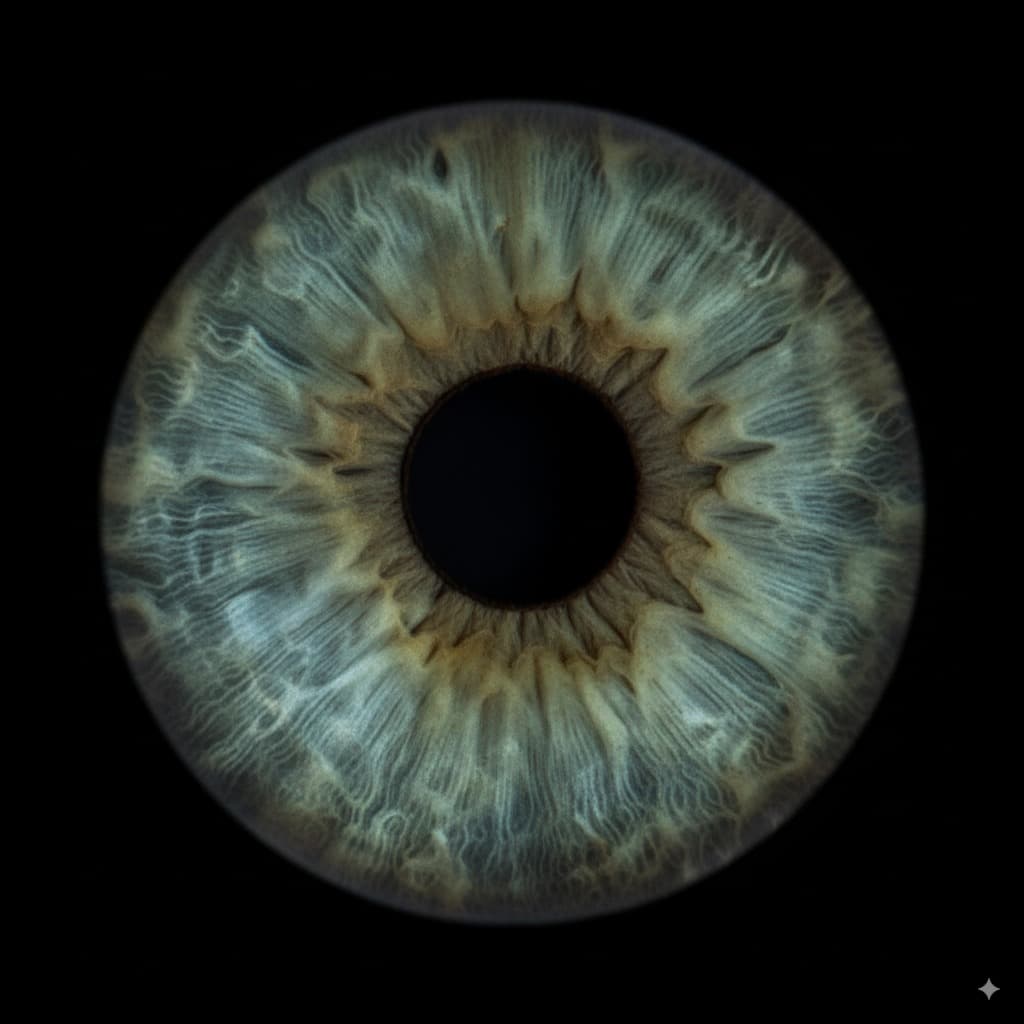
The rarest eye color in the world is green, found in just ~2% of the global population. But the full rarity ranking has surprises — gray edges out amber for second place, hazel is rarer than you'd expect, and the famous "violet eye color" is mostly myth.
This guide ranks every natural eye color from rarest to most common, with the global percentage for each, the genetic reason it's rare (or common), where in the world it's concentrated, and why some "rare" colors (purple, violet, red) aren't real natural colors at all — the full story is in our guide to violet and purple eyes.
The Rarest Eye Color Chart
Here's the full ranking visualized. Bar length represents global rarity — shorter bars are rarer. Color swatches are calibrated to natural daylight appearance.
Green eyes
~2% of peopleThe undisputed rarest of the commonly-recognized eye colors.
Gray eyes
~3% of peopleThe second-rarest — and almost always misclassified as blue.
Amber eyes
~5% of peopleThe golden 'wolf eye' color — almost always misidentified.
Hazel eyes
~5% of peopleThe chameleon color, ranked among the rarest because it requires multiple pigments at once.
Blue eyes
~8–10% of peopleFamous, photogenic — but more common globally than people think.
Brown eyes
~55–79% of peopleThe most common eye color — and the original eye color of all humans.
Heterochromia
<1% (rarer than any single color)Having two completely different colored eyes — or one iris with two distinct colors — is rarer than any single eye color. Affects fewer than 1% of people. The three types are complete (one whole iris each color), sectoral (a wedge of different color in one iris), and central (a ring around the pupil of a different color than the outer iris).
Every Eye Color Ranked, Explained
Here are all the eye colors in order of rarity — from the least common (green) to the most common (brown). Each entry gives the global percentage, the genetic reason it's rare or common, and where in the world it clusters. If you want the same information as a quick side-by-side, our eye color chart lays every color out by rarity in one table.
Rank #1 · ~2% of people
Green Eyes
The undisputed rarest of the commonly-recognized eye colors.
Why it's rare
Green eyes require an unlikely combination of low-to-moderate melanin in the iris stroma plus the presence of yellow lipochrome pigment. Add Tyndall scattering of blue light and the perceived color shifts into green. Three things need to line up genetically — and they rarely do.
Where it's most common
Most concentrated in Iceland (~17%), Ireland and Scotland (10–15%), and parts of Central and Northern Europe. Globally, green sits at around 2% — vanishingly rare in Africa, East Asia, and South Asia.
Quick fact
Every shade of green is structural color — there is no green pigment in any human iris. What you see is a clever light trick.
Famous people with green eyes
Adele, Emma Stone, Tom Cruise, Scarlett Johansson, Chris Pine, Tilda Swinton, Bradley Cooper.
Rank #2 · ~3% of people
Gray Eyes
The second-rarest — and almost always misclassified as blue.
Why it's rare
True gray eyes have even less melanin in the iris stroma than blue eyes, with a unique collagen-fiber arrangement that scatters all wavelengths of light evenly instead of just blue. The exact combination is unusual and statistically rarer than blue.
Where it's most common
Most common in Northern and Eastern Europe — particularly Russia, the Baltic states, Iceland, and Northern Germany. Also found in some North African populations.
Quick fact
Gray eyes can appear blue, green, or silver depending on lighting — which is why most people with true gray eyes spent their childhood being told they have blue eyes.
Famous people with gray eyes
Henry Cavill (gray-blue), Kanye West, Heather Graham, Pierce Brosnan, Robert Pattinson (sometimes gray-blue).
Rank #3 · ~5% of people
Amber Eyes
The golden 'wolf eye' color — almost always misidentified.
Why it's rare
Amber requires high concentrations of lipochrome (yellow pigment) with minimal eumelanin (brown pigment) and no green-shifting Tyndall scattering. The result is a uniform copper-gold iris with no blue or green tones.
Where it's most common
Most common in South America, parts of Asia (especially the Caucasus region), and Southern Europe. Often misclassified as light brown by people who haven't seen a true amber up close.
Quick fact
Amber is uniform across the iris — that's how you tell it from hazel, which is always multi-tonal. If a single solid golden color, it's amber. If a ring with different outer color, it's hazel.
Famous people with amber eyes
Nicole Richie, Darren Criss, Jennifer Garner (light hazel-amber), Eliza Dushku, Olivia Wilde (sometimes amber).
Rank #4 · ~5% of people
Hazel Eyes
The chameleon color, ranked among the rarest because it requires multiple pigments at once.
Why it's rare
Hazel needs moderate melanin distributed unevenly across the iris — typically a brown ring around the pupil that transitions to green or yellow at the outer edge. Two pigment zones in one iris is genetically uncommon.
Where it's most common
Most common in Europe (especially Spain, Italy, France) and Western Asia. Reported rates vary because hazel is frequently mistaken for light brown or green by casual observers.
Quick fact
Hazel eyes really do appear different in different light — the brown ring stays constant while the outer ring shifts perceived hue based on ambient color temperature.
Famous people with hazel eyes
Tyra Banks, Jason Statham, Steve Carell, Penélope Cruz, Demi Moore, Jude Law, Kelly Clarkson.
Rank #5 · ~8–10% of people
Blue Eyes
Famous, photogenic — but more common globally than people think.
Why it's rare
Blue eyes require very low melanin and a specific HERC2 gene mutation that arose 6,000–10,000 years ago. Every blue-eyed person on Earth shares a single common ancestor — but that ancestor's lineage spread widely through Europe over millennia, so blue is now common (not rare) in many populations.
Where it's most common
Most common in Northern and Eastern Europe, particularly Scandinavia, the Baltics, and Ireland. Rare in non-European populations, but common enough globally to land in 5th place overall.
Quick fact
There is no blue pigment in a blue iris — the color comes entirely from Tyndall light scattering, the same physics that makes the sky blue.
Famous people with blue eyes
Paul Newman, Cate Blanchett, Daniel Craig, Frank Sinatra, Taylor Swift, Chris Hemsworth, Megan Fox.
Rank #6 · ~55–79% of people
Brown Eyes
The most common eye color — and the original eye color of all humans.
Why it's this common
Brown isn't rare at all. It dominates because it's eumelanin-rich, dominant in inheritance patterns across most populations, and was the only eye color humans had before the HERC2 mutation (which produced blue) arose.
Where it's most common
Universal — most common in Africa, East Asia, South Asia, the Middle East, and Southern Europe. Globally, more than half of all people have some shade of brown eyes.
Quick fact
Every blue-eyed person you'll ever meet has brown-eyed ancestors. Brown is the genetic baseline; everything else is a variant.
Famous people with brown eyes
Beyoncé, Sandra Bullock, Mindy Kaling, Will Smith, Bruno Mars, Zendaya, Idris Elba.
Green vs Gray: The Rarity Ranking Debate
You'll find plenty of articles that swap green and gray at the top of the rarity list. So which is actually rarer — green or gray? The honest answer is "it depends on how you count," but the consensus across the largest population studies puts green ahead.
Why green usually wins #1
Three reasons green takes the #1 rarity spot in most credible sources:
- Tighter geographic concentration. Green is concentrated in a small ribbon of Northern and Central Europe. Outside that region, it's nearly absent. Gray, by contrast, has small pockets across more populations (Russia, the Baltics, parts of North Africa, occasional instances in South Asia).
- Harder to produce genetically. True green requires the HERC2 melanin-blocking mutation plus additional lipochrome (yellow pigment) production. Gray requires the same HERC2 mutation plus a different modification — a thicker, denser iris stroma. Green involves an additional pigment pathway that has to align perfectly with the melanin reduction.
- Less overlap with other colors. Gray often gets reclassified as "blue" in self-reported eye color surveys, which inflates apparent gray frequency. When trained observers classify irises in person, gray drops back below green again.
When gray actually beats green
In some studies — particularly those using strict spectral definitions of "gray" (collagen-scattered light only, no blue tint at all) — gray comes out ahead. Under that definition, "true gray" might be 1% or less, which would beat green's ~2%. But most everyday categorizations are looser, and under looser definitions green wins.
Practical takeaway: if your eye color identifier app says you have green or gray eyes, you're in the rarest 2–5% of the world either way. Don't lose sleep over which is technically rarer — both are genuinely uncommon.
Heterochromia: Rarer Than Any Single Color
If you really want to win the rarity contest, you need heterochromia: having two different colored eyes, or one iris with two distinct colors. Less than 1% of the world's population has any form of heterochromia. It comes in three variants:
- Complete heterochromia — one iris is entirely one color, the other iris is a completely different color. Think one brown eye and one blue eye.
- Sectoral heterochromia — one iris contains a wedge of a different color, like a quarter of the iris being green and the rest brown.
- Central heterochromia — both irises have a ring of one color around the pupil and a different color further out. This is the most common form, and many people who think they have "hazel" eyes actually have central heterochromia.
Heterochromia can be congenital (you were born with it) or acquired through eye injury, certain medications, or rare medical conditions. Famous examples: Mila Kunis (complete), Kate Bosworth (sectoral), Henry Cavill (subtle complete), Jane Seymour (complete). For more detail, see our deep dive on heterochromia: the science of two-toned eyes.
The "Violet Eyes" Myth (And Other Fake Rarities)
You'll see hundreds of articles claim that violet, purple, or red eyes are the "true rarest" eye color. Almost all of these are wrong. Here's what's actually going on with each.
The Elizabeth Taylor "violet eyes" story
Elizabeth Taylor is the go-to example for "violet eyes." The truth: she had very deep blue eyes that took on a subtle violet cast under specific lighting and with the cosmetic palette of 1950s and '60s Hollywood. Photographs showing her violet irises are color-graded. In natural daylight, her eyes were a striking but unambiguously blue color. No human has true violet pigment in their iris — it doesn't exist in the human gene pool.
Alexandria's Genesis — pure internet hoax
"Alexandria's Genesis" is the name of a viral creepypasta story from the early 2000s describing a fictional genetic mutation that gives people purple eyes, no body hair, and immortality. It is not real. There is no peer-reviewed evidence of the condition. Despite this, it's cited as fact across thousands of low-quality blog posts and TikTok videos. Ignore it.
Red eyes — only in albinism
Genuine red or pink eyes occur only in people with albinism, where near-total absence of melanin in the iris allows the red light from blood vessels at the back of the eye to be visible through the colorless tissue. This isn't a discrete eye color — it's a feature of a medical condition. People with albinism most often have very pale blue or pink-tinted gray irises in normal lighting.
The bottom line on "mythical" rare colors
Real human iris pigmentation tops out at the six colors in our ranking. Anything else you've seen attributed to a celebrity is either:
- Colored contact lenses
- Photographic / film color grading
- A medical condition (albinism, heterochromia, uveitis)
- Pure internet fiction (Alexandria's Genesis)
The Rarest Hair-and-Eye Color Combinations
Even rarer than a single rare eye color is a rare combination of hair color and eye color. These pairings require multiple recessive genetic variants to line up — the math gets steep fast.
- Red hair + blue eyes — the rarest natural combination. Both traits are recessive. Found in under 1% of the global population, concentrated mostly in Northern Europe.
- Red hair + green eyes — slightly more common than red+blue but still rare (~1–2% globally). Genuinely beautiful and instantly recognizable.
- Blonde hair + brown eyes — unusual because blonde hair correlates strongly with low melanin, while brown eyes correlate with high melanin. Mostly found in Southern Europe and parts of Western Asia.
- Black hair + blue eyes — striking and rare; the "black Irish" phenotype. Around 1% of people of Irish, Welsh, or French descent.
- Black hair + green eyes — extremely rare outside of Iceland, Ireland, and parts of Eastern Europe.
Beyond Humans: The Rarest Eye Colors in Animals
Curiosity about rare eye colors often extends to pets. The ranking is different for animals because their iris genetics don't map to ours — most mammals have entirely different pigment pathways. Here's how rarity works in the most- searched species.
The rarest cat eye color
The rarest naturally-occurring cat eye color is dichroic (heterochromia) — one blue eye and one eye of a different color (usually gold, green, or copper). It's found almost exclusively in white-coated cats, because the same gene that suppresses coat pigmentation also suppresses iris pigmentation. The Turkish Van breed is famous for it. Affected cats are sometimes called "odd-eyed." Within solid-color irises, pure deep-orange eyes are the rarest, followed by green; blue is uncommon outside breeds like Siamese, Ragdoll, and Birman.
The rarest dog eye color
Heterochromia tops the dog rarity list too, often associated with the merle coat pattern found in Australian Shepherds, Border Collies, Catahoula Leopard Dogs, and some Great Danes. The Siberian Husky breed has a higher rate of heterochromia than most — roughly 10% of huskies have it, compared to under 1% in most other breeds. Within solid colors, pale yellow or true amber eyes are rarer than the more common brown. Pure blue eyes (without merle or husky breeding) are also quite unusual.
The rarest horse eye color
Blue eyes are the rarest horse eye color, found in fewer than 5% of horses globally. They're strongly associated with specific coat patterns — cream-colored horses (palomino, cremello), splashed white, and sabino. The rarest horse eye configuration is heterochromia, sometimes called "wall-eyed" — common enough to be named, but well under 1% across all horses worldwide.
Birds of prey
Red and orange irises are the norm for hawks and eagles, with red getting more pronounced as the bird ages. The rarest eye color in raptors is blue, which appears in a few owl species (notably the blue-eyed phase of certain Strix owls) and extremely rarely in juvenile eagles before their irises shift to adult coloration. Yellow eyes are common across owl species; brown is rarer in raptors than in most other birds.
Why animal rarity rankings can't be compared to human
Animal iris colors use a different mix of pigments than human eyes. Most carnivores have a reflective layer behind the retina called the tapetum lucidum that makes their eyes appear to glow in the dark — and that layer influences perceived iris color significantly. So "rare" in a cat or dog is rarity within that species's pigment options, not a direct human-comparable ranking. A cat with bright blue eyes isn't in the human "blue is 8–10% globally" category — it's in a separate evolutionary lineage entirely.
Where Each Eye Color Is Most Common (Country by Country)
Global rarity numbers hide a huge story: any given eye color is wildly more or less common depending on which country you're standing in. Green eyes might be 2% globally but 17% in Iceland. Blue eyes are 8–10% globally but 80%+ in parts of Finland and Estonia. Here's where each color clusters.
Brown eyes (~55–79% globally)
Brown is the global default. Functionally universal in sub-Saharan Africa, East Asia, South Asia, the Middle East, and Indigenous populations of the Americas — often 95% or higher. In Southern Europe, Mediterranean countries still skew majority brown (Italy ~75%, Spain ~70%, Greece ~80%). Brown thins out fastest as you move north and east through Europe: France is roughly 50/50 brown/light, while Sweden, Norway, Estonia, and Latvia dip below 30% brown.
Blue eyes (~8–10% globally)
The genealogical home of blue eyes is the Baltic region. Estonia and Finland record 80–89% blue-eye prevalence among ethnic Finns and Estonians — the highest in the world. Other high-blue countries: Latvia (~75%), Sweden (~70%), Iceland (~70%), Denmark (~60%), Norway (~55%), Germany (~40%), the Netherlands (~38%), UK (~30%), Ireland (~30%). The US is roughly 16% blue-eyed today, down from ~50% in 1900 — a shift driven by demographic change, not genetics.
Green eyes (~2% globally)
Iceland is the global capital of green eyes — about 17% of the population. Other green-heavy countries: Ireland (~10%), Scotland (~10%), Hungary (~7%), parts of Western and Northern Germany (~5%), Pakistan's Pashtun and Kalash populations (small but visible green-eyed minorities). Green is essentially absent in East Asia, South Asia (outside specific groups), sub-Saharan Africa, and most of the Americas — fractions of a percent in those regions.
Hazel eyes (~5% globally)
Hazel concentrates in Western and Central Europe (Spain, France, Italy, Hungary, Austria — each around 15–25% hazel), with notable secondary clusters in the Middle East and Brazil. The United States is around 18% hazel, the highest hazel prevalence of any major English-speaking country. Hazel is rare in Northern Europe and almost absent in East Asia.
Gray eyes (~3% globally)
Gray clusters in Northern and Eastern Europe and parts of North Africa. Russia and the Baltic states have the highest concentrations — roughly 5–8% in ethnic Russians and 6–9% in Latvians and Estonians. Smaller pockets exist in Iceland, the Netherlands, and parts of Algeria and Tunisia. Outside these regions, gray is exceedingly rare.
Amber eyes (~5% globally)
Amber is the most geographically diverse of the rare colors, with significant populations in South America (especially Argentina, Brazil, and Mexico), parts of South Asia and the Middle East, and historically among the populations of the Caucasus region (Armenia, Georgia). Notably, amber occurs in populations where green and gray are nearly absent — making it the only "rare" color with meaningful presence outside Europe.
Why Different Sources Give Different Rarity Percentages
You'll find different numbers across Cleveland Clinic, Healthline, Verywell Health, the AARP article, this guide, and Wikipedia. The variation isn't laziness — it's that rarity numbers depend on three things that legitimately differ across studies.
1. How "eye color" is defined
Some studies use the six categories we use here. Others collapse amber into brown (which makes brown look more common and amber disappear). Some treat hazel as a sub-type of brown rather than its own color. The looser the categorization, the more "rare" colors get absorbed into "brown" or "blue."
2. Whose eyes are being counted
A study of US adults will produce wildly different numbers than a study of Northern European adults than a global meta-analysis. Most popular rarity articles cite US-based numbers without saying so, which produces inflated percentages for blue eyes (16% US vs ~9% global) and underrepresents brown.
3. Self-reported vs. observer-classified
Self-reported data ("what color do you say your eyes are?") consistently overcounts blue and undercounts gray, amber, and hazel — because most people default to the first color they remember being told as a child. Studies using trained observers or AI iris analysis produce meaningfully different distributions.
The numbers in this guide
We've used global, observer-classified figures throughout this guide, drawing on the Cleveland Clinic, Simcoe et al. 2021, and AAO references. If you compare another source that cites US-specific or self-reported numbers, expect 5–15 percentage point differences for individual colors. The rarity ranking, however, stays consistent across sources: green > gray > amber/hazel > blue > brown.
The Evolution of Rare Eye Colors
Ten thousand years ago, the rarity rankings looked completely different. Every human on Earth had brown eyes. There were no blue eyes. No green eyes. No gray. Just brown, with very modest variation in shade. So where did the rare colors come from?
The HERC2 mutation: the origin of every non-brown eye
Between roughly 6,000 and 10,000 years ago, somewhere in what's now the Black Sea region or central-eastern Europe, a single individual was born with a mutation in the HERC2 gene. That mutation switched off OCA2-driven melanin production in the iris stroma. The result: blue eyes — the world's first non-brown human eyes. Every blue, gray, and green-eyed person alive today descends from that one ancestor.
Why blue spread (and brown didn't disappear)
Blue eyes spread through Europe over thousands of years, but brown didn't disappear. There's active debate about whether the HERC2 mutation conferred any survival advantage — most current evidence points to sexual selection (people found blue eyes attractive and chose blue-eyed partners more often, an effect that still shows up in which eye colors people rate as most attractive today) rather than natural selection. Either way, blue rose from 0% to roughly 8–10% globally over the last 10,000 years, with much higher concentrations where the original mutation spread densely.
Green, gray, and amber: secondary mutations
Green eyes emerged when the HERC2 melanin reduction combined with separate genetic variants that produced lipochrome (yellow pigment) in the iris stroma. Gray emerged when the HERC2 mutation combined with stroma-thickening variants that caused light to scatter across all wavelengths uniformly. Amber appears to have originated independently in multiple populations — it's the only "rare" color that doesn't require the HERC2 mutation, which is why it's found in non-European populations where blue is rare.
The future: are rare colors getting rarer?
Yes, statistically. Global migration and intermarriage between populations gradually mix recessive variants (which produce rare colors) with dominant variants (which produce brown eyes). In the US, blue eyes have dropped from about 50% of the population in 1900 to roughly 16% today — a 70% relative decline in 125 years, driven entirely by demographic change. Green, gray, and amber are following slower but similar trajectories. The math says all non-brown colors will become statistically rarer over the next few centuries, with brown continuing its drift toward universal dominance.
The Science: Why Some Eye Colors Are Rarer Than Others
Eye color rarity comes down to two factors: the number of genetic variants required to produce a color, and how widespread those variants are in the human gene pool.
How rare colors happen
Brown eyes are the genetic default — they require high melanin (eumelanin) and no special variants. Every human starts from this baseline. Rarer colors require specific additional modifications:
- Blue requires the HERC2 mutation that inhibits OCA2-driven melanin production — a single mutation that arose 6,000–10,000 years ago and spread through Europe.
- Green requires the HERC2 mutation AND the addition of lipochrome (yellow pigment) production in the iris stroma. Two independent factors.
- Hazel requires moderate melanin plus uneven distribution across the iris (a brown inner ring, green/yellow outer ring). The unusual gradient is the rare part.
- Amber requires high lipochrome with minimal melanin — uniform across the iris, no Tyndall effect. Three things to line up.
- Gray requires the HERC2 mutation PLUS a particularly thick stroma with dense collagen deposits to scatter light uniformly. Even more specific than blue.
A 2021 genome-wide meta-analysis by Simcoe et al. identified 124 independent genetic variants across 16 gene regions that contribute to eye color. That polygenic complexity is why predicting your child's eye color from your own is so unreliable, and why "rare" colors require an unlikely combination of multiple variants in the same person.
Check How Rare Your Eye Color Is
Curious where you fall on this ranking? Our AI Eye Color Rarity Calculator analyzes one photo of your eye and gives you:
- Your exact color and any secondary tones
- Global rarity percentage based on real demographic data
- The countries where your color is most common
- A confidence score on the AI's identification
- A unique iris-pattern code (each iris is unique even within the same color)
Frequently Asked Questions
What is the rarest eye color?
Green is the rarest of the commonly-recognized natural eye colors, found in about 2% of the global population. Gray (~3%) is second, then amber (~5%) and hazel (~5%). Heterochromia — having two different colored eyes — occurs in under 1% of people, making it rarer than any single color.
What is the second rarest eye color?
Gray, at approximately 3% globally. Gray is often misclassified as blue because both share low melanin levels, but gray has a denser stroma with collagen fibers that scatter all wavelengths of light evenly.
Are green eyes more rare than blue eyes?
Yes — significantly. Green eyes are in about 2% of people globally; blue eyes are in 8–10%. Regional concentration matters though: in Iceland around 17% of people have green eyes, while in much of South Asia fewer than 0.5% do.
Is hazel the rarest eye color?
No, but it's relatively uncommon at ~5%. Green (~2%) and gray (~3%) are both rarer than hazel.
Is gray the rarest eye color?
Gray is the second rarest at approximately 3%, just behind green at 2%.
Is purple or violet the rarest eye color?
True violet or purple eyes don't exist as a natural human eye color. Elizabeth Taylor's famous "violet eyes" were actually very deep blue with a violet cast in specific lighting. The closest natural cases are very pale blue irises in people with albinism.
What is the rarest eye and hair color combination?
Red hair with blue eyes is the rarest natural combination, occurring in well under 1% of the global population. Both traits are recessive and require specific variants on multiple genes.
Who has the rarest eye color in the world?
Anyone with natural green eyes combined with heterochromia (a ring or wedge of different color) has the rarest configuration. Among celebrities, that overlap is hard to verify, but green-eyed examples include Adele, Tom Cruise, and Emma Stone, while heterochromia is seen in Mila Kunis, Henry Cavill, and Kate Bosworth.
What is the least common eye color?
Among the standard natural colors, green is the least common — about 2% of people worldwide — followed by gray (~3%), then amber and hazel (~5% each). Red/violet (seen almost only with albinism) and heterochromia (under 1%) are rarer still, but aren't discrete pigment colors. So for everyday purposes, green is both the rarest and least common natural eye color.
What are the eye colors in order of rarity?
From rarest to most common: green (~2%), gray (~3%), amber (~5%), hazel (~5%), blue (~8–10%), and brown (~55–79%). Outside that main list, red/violet (albinism) and heterochromia are rarer than any single standard color. Percentages are global averages and shift a lot by region.
Can you change your eye color to a rare one?
Not naturally — adult iris pigmentation is set in early childhood. Colored contact lenses can change apparent color temporarily and safely. Surgical procedures (laser iris depigmentation, iris implants) carry serious risks of glaucoma and vision loss and are not recommended.
Sources & Further Reading
- Simcoe, M. et al. (2021). Genome-wide association study in 195,000 individuals identifies 50 previously unidentified genetic loci for eye color. Science Advances.
- Eiberg, H. et al. (2008). Blue eye color in humans may be caused by a perfectly associated founder mutation in HERC2 inhibiting OCA2. Human Genetics.
- Cleveland Clinic. (2024). Eye Colors: Hazel, Green, Amber, Blue, Grey & Brown.
- MedlinePlus Genetics. U.S. National Library of Medicine. Is eye color determined by genetics?
- American Academy of Ophthalmology. Iris Anatomy and Function.
Related Reading
- Rarest Hair and Eye Color Combinations — why red hair with blue eyes (~0.17%) is the rarest natural pairing, with the full hair-and-eye rarity chart.
- What Color Are My Eyes? Identify Your Eye Color with AI — full guide to identification methods and the science of eye color.
- Eye Color Rarity Calculator — find your personal rarity percentage.
- AI Eye Color Identifier — get your exact color in 30 seconds.
- iOS app · Android app
Written by the MyEye - AI Eye Scanner & Iris Analyzer Team. This article is for educational and entertainment purposes only and does not constitute medical advice. Population percentages cited are global averages based on multiple demographic studies and may vary by region and methodology.
Last updated: May 14, 2026.