Amber Eyes: The Rare Golden Iris Explained
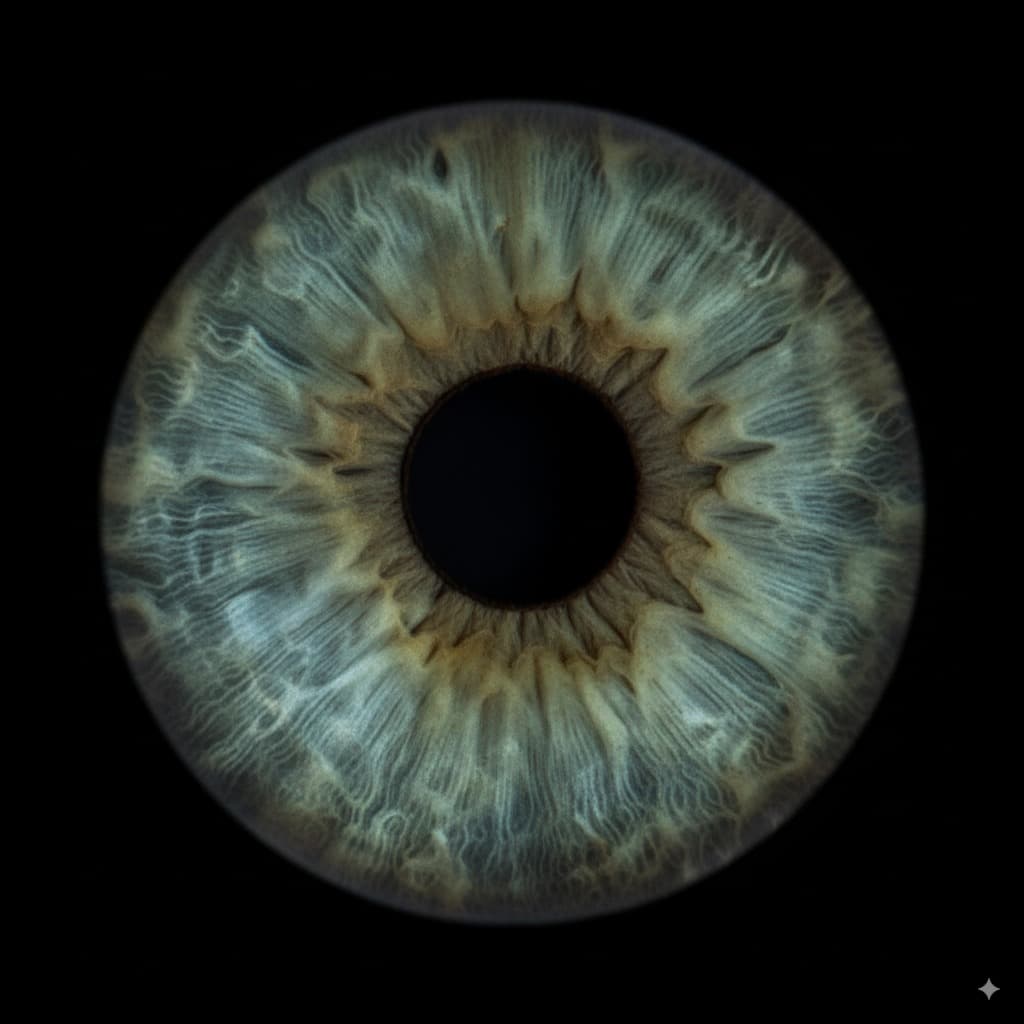
Amber eyes are one of the rarest natural eye colors — found in just about 5% of people worldwide. They're also one of the most-misidentified, often confused with light brown or hazel. This guide explains the science of amber eyes, the four main amber shades, how to tell amber from hazel and brown, and which celebrities really do have them.
What Are Amber Eyes?
Amber eyes are a natural iris color characterized by a uniform golden, copper, or warm yellow-brown appearance across the entire iris — no green tones, no blue scattering, no multi-zone gradient like hazel. They occur in roughly 5% of the world's population, making them one of the rarest eye colors among the major categories.
The distinctive amber color comes from an unusual pigmentation combination: high amounts of lipochrome (also called pheomelanin, the yellow pigment) deposited in the front layer of the iris, combined with very low amounts of eumelanin (the brown-to-black pigment that dominates brown eyes). This is essentially the opposite ratio from brown eyes, which have far more eumelanin and less lipochrome.
In strong natural light, amber irises appear to glow — they reflect warm yellow and gold tones back at the viewer. In dimmer indoor light, they often look closer to a deep copper or warm brown, which is why many people with amber eyes spent their childhoods being told they had "light brown" eyes. The truth: amber and brown are different pigment configurations producing a different visual effect.
How Rare Are Amber Eyes? (Global Distribution)
Amber eyes are present in roughly 5% of the global population. That puts them in the rare category — below brown (55–79%) and blue (8–10%), tied with hazel (~5%), and above green (~2%) and gray (~3%). For full rarity ranking, see our rarest eye color guide.
Where amber eyes are most common
Unlike green, gray, and blue eyes — which are heavily concentrated in Northern and Eastern Europe — amber eyes have a much wider geographic distribution. The notable populations:
- South America — Argentina, Brazil, and Mexico have meaningful amber-eyed populations. In some regions of Brazil, amber eyes approach 8–10% of the local population.
- The Caucasus region — Armenia, Georgia, Azerbaijan, and parts of Turkey have historically been strongholds for amber, including the distinctive golden amber shade.
- South Asia — Parts of Pakistan's northern regions and certain Hindu Kush populations carry a higher-than-average rate of amber eyes.
- Southern Europe — Spain, Italy, and southern France have notable amber populations, often blending toward warm hazel.
- Sub-Saharan Africa — Rare but documented, particularly in parts of East Africa where the genetic conditions for high lipochrome and low eumelanin can co-occur.
Why amber is geographically diverse
The other rare eye colors (green, gray, blue) all trace back to the same HERC2 mutation that arose in Northern Europe about 6,000–10,000 years ago — that's why they cluster in that region's descendants. Amber doesn't share that ancestry. Instead, it appears to have arisen independently in multiple populations, which is why it shows up across South America, Asia, and Europe without a single common origin story.
The 4 Shades of Amber Eyes
Not all amber eyes look the same. Four distinct shades occur regularly. The shade depends on the specific ratio of lipochrome to whatever small amounts of eumelanin are present, plus how the iris stroma is structured. Here's the breakdown.
Most common of the amber shades
Light Amber
Bright, honey-gold. The lightest natural amber shade. Often appears almost yellow in direct sunlight. Most common in South American populations and parts of Southern Spain.
Rare, distinctive
Yellow Amber
Leans cooler, more lemon-gold than honey. The iris can appear chartreuse-yellow in bright light. Frequently confused with very pale hazel by casual observers.
Iconic 'amber'
Golden Amber
The classic amber color — saturated honey-copper with strong warm undertones. The shade most people picture when they hear 'amber eyes.' Frequently appears in Asian populations.
Often misidentified as light brown
Dark Amber
Deep copper, almost reddish-brown. The most easily confused with light brown because of overlap in saturation. Distinguished by the golden glow in sunlight.
Amber vs Hazel vs Brown vs Green: How to Tell
Amber gets confused with three colors more than any others — hazel, light brown, and (rarely) green. Here's a side-by-side breakdown of the pigment composition and visual behavior of each:
| Color | Eumelanin (brown) | Lipochrome (yellow) | Appearance | In sunlight |
|---|---|---|---|---|
| Brown | Very high | Low to moderate | Dark, uniform, absorbs light | Stays consistent in sun |
| Amber | Very low | Very high | Uniform copper-gold across iris | Glows warm yellow-gold |
| Hazel | Moderate (in inner ring only) | Moderate to high (in outer ring) | Multi-tonal: brown ring + green/yellow outer | Outer ring shifts color in sun |
| Green | Low | Low | Olive to bright green | Brightens in sun (Tyndall effect) |
Amber vs Hazel — the most common confusion
The single clearest difference: amber is uniform, hazel is multi-zone. A true amber iris is the same copper-gold color from the pupil to the outer edge. A hazel iris always has a different color near the pupil (typically brown) than at the outer edge (typically green or yellow). The transition is sometimes subtle, but it's always there in hazel.
Quick visual test: stand in natural daylight and look at your iris in a mirror at a normal viewing distance. Trace your eyes from the pupil outward — if you see the same warm gold color the entire way, it's amber. If you can spot a band of color change, it's hazel. Roughly 60% of people who self-identify as "amber" actually have a hazel iris.
Amber vs Light Brown
This is the other frequent confusion. Light brown irises have modest eumelanin and very little lipochrome — they look like a muted, even brown with no golden undertone. Amber irises have minimal eumelanin and lots of lipochrome — they look copper-gold with a warm shimmer in sunlight. The sunlight test is decisive: take your eyes outside on a bright day. If they glow warm yellow-gold and almost seem to emit color, they're amber. If they stay flat and uniform brown, they're light brown.
Amber vs Green
Less common confusion but it happens, especially at the boundary of yellow-amber and olive-green. The differentiator: green eyes use Tyndall scattering (the same blue-light effect that makes the sky blue) on top of lipochrome to produce perceived green. Amber eyes have no Tyndall component — just the yellow lipochrome itself. In overcast light, green eyes appear cooler and slightly desaturated; amber eyes stay warm and saturated.
Celebrities With Amber Eyes
Amber eyes are particularly photogenic and tend to draw attention in interviews and high-resolution photo shoots. These celebrities have confirmed or widely-discussed amber eyes — though "amber" in photo shoots can be hard to verify because lighting and color grading shift apparent iris color significantly.
Nicole Richie
Bright golden amber, very visible in natural light
Darren Criss
Warm honey-amber, sometimes shifts toward hazel in photos
Jennifer Garner
Light hazel-amber, depending on lighting
Eliza Dushku
Deep amber with copper undertones
Olivia Wilde
Amber in some lighting; debated whether amber or light hazel
Mark McGwire
Distinct light amber visible in interviews
Kristen Bell
Often described as light amber or warm hazel
Worth noting: many lists of "celebrities with amber eyes" actually include people with hazel or light brown eyes. The fact that amber and hazel get conflated in pop culture is one reason these are useful but not definitive examples — true amber tends to be more obvious in person than in photos.
Amber Eyes in Cats, Dogs, and Other Animals
Amber eyes appear in many animals — sometimes more commonly than in humans. The pigment biology is different from humans' (animals have additional iris structures and pigments we don't), but the visual result is similar: warm gold or copper irises.
Cats with amber eyes
Amber is one of the most common cat eye colors after copper/orange and green. Breeds known for amber eyes include the Bengal, Maine Coon, Norwegian Forest Cat, and Egyptian Mau. Amber cat eyes can range from pale honey to deep copper and don't typically change once the cat reaches adulthood.
Dogs with amber eyes
Amber eyes are common in dogs with red, liver, or chocolate coats — the same pigment biology that produces those coats tends to produce amber-colored irises too. Breeds with frequent amber eyes include Weimaraners (whose famous gray coats often pair with amber eyes), Chesapeake Bay Retrievers, Catahoula Leopard Dogs, certain Siberian Huskies, and many merle-coated breeds.
Wolves and wild predators
The classic "wolf eye" is actually amber — both gray wolves and most lynx species have predominantly amber irises. This is why amber eyes in humans are sometimes described as "wolf-like" in literature. The comparison is genetically incidental but visually accurate.
The Genetics of Amber Eyes
Amber eyes have a more complicated genetic story than blue or green eyes. While blue and green both trace to specific mutations (notably HERC2 affecting OCA2 expression), amber doesn't have one signature mutation. Instead, it requires a particular combination of variants on multiple genes that affect both eumelanin suppression and lipochrome production.
The key genes involved include OCA2 (for lower-than-usual brown pigment production), TYR and TYRP1 (which influence both pigment types), SLC45A2, and at least 10 others documented in modern genome-wide association studies. For a deeper look at the genetic mechanisms, see our eye color genetics guide.
Because amber doesn't depend on the HERC2 mutation that produced blue eyes, it can occur in populations where blue eyes are essentially absent. This is why amber shows up in populations across Africa, Asia, and Latin America — places where green and blue are extremely rare. It also explains why amber-eyed children can appear in families with no recent amber ancestry: enough independent recessive variants need to line up, and that's statistically possible in any population.
Can You Get Amber Eyes? (Contacts & Cosmetics)
Your natural iris pigment is set in early childhood and doesn't change in adulthood. You cannot grow amber eyes from a different starting color through diet, lighting, supplements, or any home remedy. The only ways to appear to have amber eyes are:
- Colored contact lenses. Many brands now offer amber, honey, and golden-amber color contacts. Quality varies dramatically — the cheapest contacts look obviously fake, while premium custom-tinted lenses can pass for natural amber in most lighting.
- Makeup tricks. Warm copper and gold eyeshadows make the surrounding skin tones bring out any yellow tones already in your iris. This can make light-brown or hazel eyes look more amber, but only slightly.
- Lighting and clothing. Warm gold or copper shirts and jackets reflect onto the iris and shift its apparent color toward amber. Photographers use this trick in portrait shoots all the time.
Surgical procedures to change eye color (laser iris depigmentation, iris implants) cannot produce amber. They typically lighten brown to gray or blue and carry serious risks of glaucoma and vision loss. There's no cosmetic procedure that can add lipochrome to an iris that doesn't already produce it.
Amber Eyes in History, Mythology, and Culture
Amber eyes have a long history of cultural significance — partly because of their rarity, and partly because they share a name with the fossilized resin that ancient civilizations valued as much as gold. Across mythology, literature, and modern pop culture, amber eyes have consistently been treated as a marker of something special, dangerous, or both.
Ancient symbolism
In ancient Greek and Roman writing, amber-colored eyes were associated with predatory animals — wolves, lions, and hawks. Greek physician Galen wrote about amber-eyed people in the 2nd century AD and described them as having "the gaze of the lion" — a phrase that influenced descriptions of charismatic leaders for centuries. The Romans associated amber eye color with the goddess Diana, the huntress, because of the visual link to her sacred animal: the wolf.
In medieval European folk traditions, amber eyes were sometimes considered a sign of supernatural ability or shapeshifting — particularly in regions of Eastern Europe where werewolf legends were common. The connection wasn't malicious; it was about the visual resemblance to wolves. Folklore aside, the association points to a real observation: amber-eyed people stood out in northern European populations where the color was vanishingly rare.
The amber gemstone connection
The word "amber" itself comes from the Arabic anbar, which originally referred to ambergris (a substance from sperm whales) before being transferred to fossilized tree resin. Both substances were valued in ancient trade for their golden color and warm visual glow — the same qualities that make amber-colored eyes distinctive. The comparison between amber gemstones and amber eyes is so common in literature that the two have been linguistically fused: when you describe someone's eyes as "amber," you're evoking both the jewel-quality material and its warm visual character.
Amber eyes in literature
Modern fiction has leaned heavily into amber eyes as a shorthand for something otherworldly or predatory. Edmund de Waal's acclaimed 2010 memoir The Hare with Amber Eyes brought the phrase into the literary mainstream — though the book is about a netsuke sculpture, not a real animal. The Twilight series describes the eyes of certain vampires as "topaz" or "butterscotch," both essentially amber. In fantasy fiction generally, amber eyes are the default for shifters, werewolves, and other not-quite-human characters — a tradition traceable directly to the wolf comparison going back to antiquity.
Amber eyes and personality stereotypes (and why they're not real)
You'll find dozens of articles claiming that amber-eyed people are "mysterious," "charismatic," or "intense." The honest scientific answer: eye color has no causal relationship to personality. The handful of studies showing small correlations between eye color and behavior are confounded by cultural expectations and the well-known "Barnum effect" (people seeing themselves in vague descriptions).
That said, amber-eyed people do get noticed more often, simply because the color is unusual. If you have amber eyes, you've probably been told you have "piercing" or "unusual" eyes throughout your life. That's a real social phenomenon — but it's about the rarity of the color in your environment, not about anything inherent in your personality.
Find Out If You Actually Have Amber Eyes
About 60% of people who think they have amber eyes actually have hazel, and about 20% have light brown. The fastest way to know for sure: AI pixel-level color analysis. Our AI Eye Color Identifier analyzes one iris photo and tells you the exact color, any secondary tones, plus your global rarity percentage.
Frequently Asked Questions
Are amber eyes real?
Yes. Amber eyes are a fully natural eye color caused by high lipochrome and low eumelanin in the iris. They're not a Photoshop or contact-lens illusion — about 5% of the global population has them.
How rare are amber eyes?
Approximately 5% of people globally have amber eyes. That puts them rarer than blue (8–10%) and brown (55–79%), tied with hazel (5%), and more common than green (2%) and gray (3%).
What causes amber eyes?
High concentrations of lipochrome (yellow pigment) in the iris stroma combined with very low concentrations of eumelanin (brown pigment). This unusual ratio produces the uniform copper-gold appearance.
Amber eyes vs hazel — how do I tell?
Amber is uniform across the entire iris — one color from pupil to outer edge. Hazel has visible color zones — typically a brown ring around the pupil that transitions to green or yellow at the outer edge. If your iris looks the same all the way through, it's amber.
Amber eyes vs brown — how do I tell?
Take your eyes outside in bright daylight. Amber irises glow warm yellow-gold and almost seem to emit light. Brown irises stay flat and absorb light without that characteristic warm shimmer.
What are the shades of amber eyes?
The four main shades are light amber (bright honey), yellow amber (cooler, more chartreuse), golden amber (classic copper-gold), and dark amber (deep coppery brown, often mistaken for light brown).
Which celebrities have amber eyes?
Nicole Richie, Darren Criss, Jennifer Garner (light amber-hazel), Eliza Dushku, Mark McGwire, Kristen Bell (light amber), and Olivia Wilde in certain lighting are the most commonly cited examples.
Do amber eyes change color?
The underlying pigment doesn't change in adults, but amber eyes appear noticeably different in different lighting — bright golden in sunlight, deeper copper indoors. That's normal optical variation, not actual pigment change.
Can I get amber eyes with contacts?
Yes — high-quality amber, honey, and golden colored contact lenses can give you the appearance of amber eyes while you wear them. Quality matters: cheap contacts look obviously fake, while custom-tinted premium contacts pass for natural in most lighting.
Sources & Further Reading
- Cleveland Clinic. (2024). Eye Colors: Hazel, Green, Amber, Blue, Grey & Brown.
- Simcoe, M. et al. (2021). Genome-wide association study in 195,000 individuals identifies 50 previously unidentified genetic loci for eye color. Science Advances.
- MedlinePlus Genetics. Is eye color determined by genetics? U.S. National Library of Medicine.
- American Academy of Ophthalmology. Iris Anatomy and Function.
Related Reading
- Blue Eyes: How Rare They Are & Why There Is No Blue Pigment
- Brown Eyes: How Common They Are, Genetics & Shades
- Gray Eyes: How Rare They Are & Why They Are Not Just Blue
- The Rarest Eye Color: 2026 Definitive Ranked Guide
- What Color Are My Eyes? Identify Your Eye Color with AI
- Eye Color Genetics: What Actually Determines Your Eye Color
- AI Eye Color Identifier (the tool)
- Eye Color Rarity Calculator
Written by the MyEye - AI Eye Scanner & Iris Analyzer Team. For educational and entertainment purposes only. Not medical advice. Population percentages cited are global averages drawn from peer-reviewed studies and may vary by region and methodology.
Last updated: June 8, 2026.