Brown Eyes: How Common They Are, the Genetics & Shades Explained
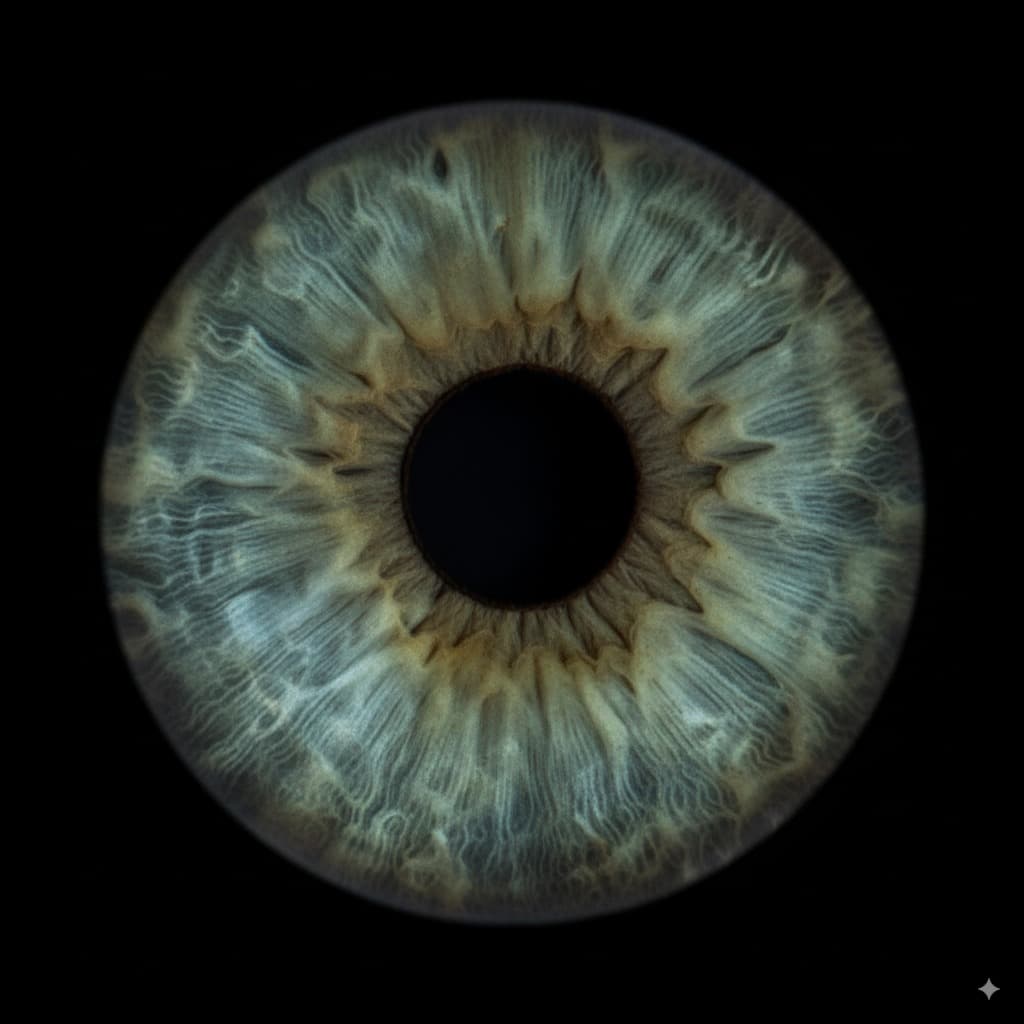
Brown eyes are the color most of humanity shares — somewhere around 70–79% of all people have them, which makes brown not just the most common eye color but the majority color on Earth. That ubiquity is exactly why brown eyes get overlooked: when most people have them, they can feel like the "plain" option. They are anything but. Brown eyes range from pale honey to a near-black so deep it swallows the pupil, they carry the most fascinating story in eye-color evolution, and the genetics behind them quietly break the rule you learned in school. This guide explains how common brown eyes really are, why brown is the human default, the full range of shades, the genetics, and whether brown eyes ever change.
What Are Brown Eyes?
Brown eyes are an iris rich in melanin — the same brown-black pigment that colors skin and hair. Unlike blue, green, and gray, which are largely optical effects produced by very little pigment, brown is the one eye color that comes from pigment you can genuinely see. The more melanin packed into the front layer of the iris, the more light it absorbs, and the darker and warmer the eye looks. A brown iris is typically a fairly uniform brown from the pupil out to the rim, though the shade deepens across an enormous range.
This is the reverse of how the lighter colors work. Blue eyes look blue because low melanin lets the iris scatter blue light back at you; green adds a trace of yellow pigment over that scattered blue. Brown skips the optical tricks entirely. With abundant melanin, nearly all the incoming light is absorbed rather than scattered, and what returns to your eye is brown. In that sense brown eyes are the most straightforward color of all: what you see is the pigment itself.
How Common Are Brown Eyes?
Brown eyes are the most common eye color in the world — by a landslide. Estimates put them at roughly 70–79% of all people, which means the majority of every human being alive has brown eyes. Every other color combined — blue, hazel, amber, gray, green — accounts for only the remaining slice. Here is where brown sits relative to the rest:
| Eye color | Approx. global share | How common |
|---|---|---|
| Brown | 70–79% | Most common (the majority) |
| Blue | 8–10% | Second most common |
| Hazel | ~5% | Uncommon |
| Amber | ~5% | Uncommon |
| Gray | ~3% | Rare |
| Green | ~2% | Rarest (non-medical) |
The 70–79% global figure actually understates how dominant brown is across most of the planet, because it's pulled down by a handful of regions where light eyes are common. Look at brown as a share by region and it's close to universal almost everywhere:
| Region | How common brown eyes are |
|---|---|
| Sub-Saharan Africa | Near-universal — almost everyone has brown eyes |
| East & South Asia | Near-universal — brown to near-black dominates |
| The Americas | Very high — the majority across North & South America |
| Middle East & North Africa | Very high — brown is the default color |
| Southern Europe | Majority brown, with more hazel and lighter eyes mixed in |
| Northern Europe | Where brown finally becomes the minority — blue and light eyes lead |
In other words, brown eyes are the rule and light eyes are the exception — a striking flip of how it can feel if you grew up in a place where blue and green are everywhere. For the full ranking of every eye color from most common to rarest, see our rarest eye color guide.
Why Brown Is the Human Default
There are two reasons brown eyes are so common, and they fit together neatly: brown is the ancestral color, and melanin is useful.
For most of human history, everyone had brown eyes. High-melanin brown is the original human state — the same way dark hair and darker skin were the ancestral norm. The lighter eye colors are comparatively recent. The variant most responsible for blue eyes is usually traced to a single mutation that arose several thousand years ago in a person somewhere around the Black Sea region, and spread from there. Every blue-, green-, and gray-eyed person alive carries a version of that relatively young change. Brown, by contrast, is simply what came first and never went away across most of the world.
It stayed dominant because melanin does real work. Melanin absorbs light, so a heavily pigmented iris lets less stray light bounce around inside the eye. In practice that means brown eyes get modestly more protection from bright sun, glare, and ultraviolet radiation — a genuine advantage in the sunny, high-UV environments where humans first evolved and where most people still live. That protection is real but should not be overstated: it's a small edge, not a shield, and it doesn't replace sunglasses. Lighter eyes only became common in Northern Europe, where sunlight is weaker and the pressure to keep high melanin was lower, which is exactly why blue and light eyes cluster in that one corner of the map. For the deeper evolutionary and genetic story, read our eye color genetics guide.
The Shades of Brown: Honey to Near-Black
"Brown" covers a wider range than any other eye color, and the whole range is driven by one thing: how much melanin is in the iris and how it's distributed. Less melanin gives a warm, light brown; more melanin gives a deep, dark brown; a great deal of melanin gives an eye so dark it looks black. Here is the spectrum, from lightest to darkest:
- Light / honey brown. The lightest true browns — warm, golden, sometimes amber-adjacent. Melanin is relatively low for a brown eye, so more warmth and detail show through. These are the shades most often confused with hazel or amber.
- Medium brown. The classic, everyday brown — clearly brown, with visible warmth and iris texture in good light. This is the most common shade worldwide.
- Dark brown. A rich, deep brown with high melanin. The iris pattern is still visible up close and in bright light, but the color reads as unmistakably dark.
- Near-black brown. Extremely high melanin — the deepest browns, where the iris absorbs so much light it can look black in ordinary conditions. These are common across East Asia, South Asia, and Sub-Saharan Africa.
The reason a light-brown iris looks the way it does isn't only the amount of melanin but also where it sits. When pigment is concentrated unevenly — heavier near the pupil, lighter toward the rim — you get warmth and a sense of depth. When it's dense and even across the whole iris, the eye reads as a flat, deep brown. That distribution is also the fault line between brown and hazel: hazel is really an uneven, part-brown iris that never commits to full brown, which we come back to below.
Dark brown vs. black eyes — are black eyes real?
Here is a fact that surprises almost everyone: there is no such thing as a truly black iris. Eyes that look black are very dark brown — the deepest end of the melanin scale, and nothing more. If you shine a bright, direct light on an eye that normally looks black, the deep brown reveals itself, and you can usually make out the iris pattern that was hiding in the shadow. The reason so-called black eyes look black in everyday life is simply that the iris is so densely pigmented it absorbs nearly all the light and blends visually with the black pupil at its center.
So dark brown and "black" eyes are not two different colors — they are the same color at different melanin levels and under different light. When people describe someone as having striking black eyes, what they're really describing is a spectacular, very high-melanin dark brown. We unpack this in full in our guide to whether black is a real eye color.
The Genetics Behind Brown Eyes
Almost everyone is taught the same tidy rule: brown eyes are dominant, blue eyes are recessive, and two brown-eyed parents will have brown-eyed kids. It's a lovely story for a biology class. It's also wrong. Eye color is polygenic — controlled by at least 16 genes acting together, not a single dominant-recessive pair — and treating brown as one master "dominant gene" hides how it actually works.
What's true is that the tendency toward brown behaves in a dominant-ish way: the gene variants that raise iris melanin tend to win out over the ones that lower it, which is why brown is so widespread. But "dominant-ish across many genes" is a world away from the simple Mendelian one-gene rule. The two genes doing most of the heavy lifting are the same ones that steer every other eye color:
- OCA2 controls how much melanin your melanocytes produce in the iris. Brown eyes have high OCA2 activity — the iris fills with pigment, which is exactly what green and blue eyes lack.
- HERC2 sits right next to OCA2 and acts as its volume control. The well-known variant at position rs12913832 can turn OCA2 down; brown-eyed people typically carry the version that leaves OCA2 turned up, so melanin production stays high.
Beyond OCA2 and HERC2, genome-wide studies have pinned down dozens of additional pigment genes — including SLC24A4, SLC45A2, TYR, and IRF4 — that fine-tune the exact shade of brown, from light honey to near-black. Because so many genes contribute, the outcome is a spectrum rather than a switch, and the inheritance is far messier than "brown beats blue."
This is why two brown-eyed parents can have a blue-, green-, or hazel-eyed child. Each parent can quietly carry low-pigment variants without showing them — their own high-melanin genes mask the light-eye variants. When a child happens to inherit enough of those low-pigment variants from both sides, lighter eyes appear even though neither parent has them. It's uncommon, but it's completely normal, and it's the clearest proof that the schoolbook rule is an oversimplification.
Can Brown Eyes Change or Lighten?
For the vast majority of people, brown eyes stay brown for life. Once melanin is laid down in early childhood, the pigment is stable, and no natural process turns a brown iris blue or green. That said, a few honest caveats are worth knowing — without any of the alarmism you'll find elsewhere:
- Lighting, not pigment. Brown eyes look lighter in bright, direct sun — where the warmth and iris detail come through — and darker in dim indoor light. This is an optical shift, not a real change in color.
- Infancy. Many babies are born with lighter or grayish eyes that darken to brown over the first 6–12 months as melanin builds up. For most brown-eyed people, that early darkening is the only real color change they'll ever experience.
- A subtle drift with age. Some people notice their brown eyes look very slightly lighter over decades as the iris changes with age. Any shift like this is gradual and minor — dramatic natural lightening does not happen.
- Medical causes. A sudden, lasting change in one eye only, or a color change paired with pain, redness, or vision problems, should be checked by an eye doctor — it can signal conditions like Horner's syndrome or Fuchs heterochromic iridocyclitis. Separately, certain glaucoma eye drops (prostaglandin analogues) can permanently darken a light or mixed iris over time. These are the exceptions, not the rule.
Bottom line: if your brown eyes seem to shift, it's almost always the light. A genuine, one-sided, lasting change is the one case worth getting looked at. Wondering whether you can change brown eyes on purpose? We cover contacts, surgery, and the myths in can you change your eye color?
Brown vs hazel — the most common mix-up
Plenty of people who've been told their whole lives that they have "light brown" eyes actually have hazel. The difference comes down to two things: uniformity and green. Brown is a single, fairly consistent brown from pupil to rim, with a lot of melanin spread fairly evenly. Hazel has less overall melanin, spreadunevenly — a warm brown or gold center that fades to green or yellow-green at the outer edge. The two giveaways: if you can see any green, or if the color clearly changes from center to rim, you're looking at hazel, not brown. If it's a flat, even brown with no green anywhere, it's brown. For the full breakdown of that boundary, see our hazel eyes guide.
How to Tell What Shade of Brown You Have
Because brown spans such a wide range — and because light brown overlaps with hazel and amber — pinning down your exact shade is harder than it sounds. Here is a reliable, low-tech checklist:
- Use bright, neutral daylight. Stand near a window during the day, not under warm indoor bulbs, which push every brown toward the same muddy tone and hide the differences.
- Get close to a mirror. Look at your iris from a few inches away so you can read the true depth and any warmth, rather than an overall impression.
- Judge the depth. Golden and warm with visible detail is light/honey brown; clearly brown with some warmth is medium; deep with little warmth is dark; so dark it blends with the pupil is near-black.
- Rule out hazel. Check for green and for a center-to-edge color change. Any green, or a warm center fading to green at the rim, means hazel — not brown.
The catch is that human eyes — including your own — are unreliable color judges, especially across the brown spectrum where the differences are subtle and the lighting changes everything. The fastest way to settle it is pixel-level analysis. The MyEye AI Eye Color Identifier reads a single iris photo, measures the actual color values, and tells you your exact shade — light honey, medium brown, dark brown, or near-black — and whether you're really hazel — plus how common your specific shade is worldwide. It runs free in your browser with no signup, and there are also free iOS and Android apps if you'd rather scan from your phone.
Brown Eyes Meaning & Symbolism
Because they belong to most of humanity, brown eyes carry warm and grounded associations across cultures — trust, dependability, approachability, and depth. Where rare colors get read as mysterious or striking, brown is far more often described as inviting: the color you feel at ease looking into. Those associations vary from place to place, and in cultures where brown is the near-universal norm, it's simply the natural, unmarked way eyes look.
It's worth being clear-eyed about all of this: these meanings are cultural and symbolic, not scientific. Eye color does not determine personality, character, or temperament. What's genuinely remarkable about brown eyes is the biology — the melanin, the light absorption, the deep evolutionary story, and the sheer range from honey to near-black — and that's more than enough on its own.
Frequently Asked Questions
How common are brown eyes?
Brown eyes are the most common eye color in the world — roughly 70–79% of all people, meaning the majority of humans have them. They're the dominant color across Africa, Asia, the Americas, the Middle East, and Southern Europe. For comparison, blue is about 8–10%, hazel and amber roughly 5% each, gray 3%, and green just 2%.
Why are brown eyes so common?
Brown comes from high melanin, which is the ancestral human state — early humans all had brown eyes, and lighter colors are recent mutations. Melanin also absorbs light, giving brown eyes modestly more protection from sun, glare, and UV, which was an advantage in the sunny regions where most humans have always lived. Light eyes only spread widely in low-sunlight Northern Europe.
Can brown eyes change or lighten over time?
For most people, no — brown stays brown for life. Brown eyes can look lighter in bright sun and some people notice a very slight drift with age, but that's minor. Dramatic natural lightening doesn't happen. A sudden change in one eye only, or a change with pain or vision problems, should be checked by an eye doctor, and certain glaucoma drops can darken iris color.
What's the difference between dark brown and black eyes?
There's no truly black iris — "black" eyes are simply very dark brown with extremely high melanin. Shine a bright light on them and the deep brown color (and the iris pattern) shows through. In everyday light the iris is so dark it blends with the pupil and reads as black. Dark brown and black eyes are the same color; only the melanin level and lighting differ.
Do brown eyes handle sunlight better?
Modestly, yes. The higher melanin absorbs more light, so brown eyes are often slightly less sensitive to bright sun and glare than blue or light eyes, with some evidence of lower risk for certain light-related conditions. The effect is small, though — it's no substitute for sunglasses. Everyone should wear UV-blocking eyewear regardless of eye color.
Can two brown-eyed parents have a child without brown eyes?
Yes. Eye color is polygenic, not simple dominant-recessive, so two brown-eyed parents can have a blue-, green-, or hazel-eyed child. Each parent can carry hidden low-pigment gene variants; if a child inherits enough of them from both sides, lighter eyes appear even though both parents have brown. This is exactly why the "brown always beats blue" rule is an oversimplification.
Sources & Further Reading
- Cleveland Clinic. (2024). Eye Colors: Hazel, Green, Amber, Blue, Grey & Brown.
- Simcoe, M. et al. (2021). Genome-wide association study in 195,000 individuals identifies 50 previously unidentified genetic loci for eye color. Science Advances.
- MedlinePlus Genetics. Is eye color determined by genetics? U.S. National Library of Medicine.
- American Academy of Ophthalmology. Iris Anatomy and Function.
Related Reading
- Hazel Eyes: How Rare They Are, Genetics & Why They Change
- Green Eyes: How Rare Are They? Genetics & Why They Look the Way They Do
- Amber Eyes: The Rare Golden Iris Explained
- Blue Eyes: How Common They Are & Where They Come From
- Gray Eyes: The Rare Silver Iris Explained
- Black Eyes: Is Black a Real Eye Color? The Truth
- The Rarest Eye Color: 2026 Definitive Ranked Guide
- Eye Color Genetics: What Actually Determines Your Eye Color
- What Color Are My Eyes? Identify Your Eye Color with AI
- AI Eye Color Identifier (the tool)
Written by the MyEye - AI Eye Scanner & Iris Analyzer Team. For educational and entertainment purposes only. Not medical advice. Population percentages cited are global averages drawn from peer-reviewed studies and may vary by region and methodology.
Last updated: July 2, 2026.