Green Eyes: How Rare Are They? Genetics & Why They Look the Way They Do
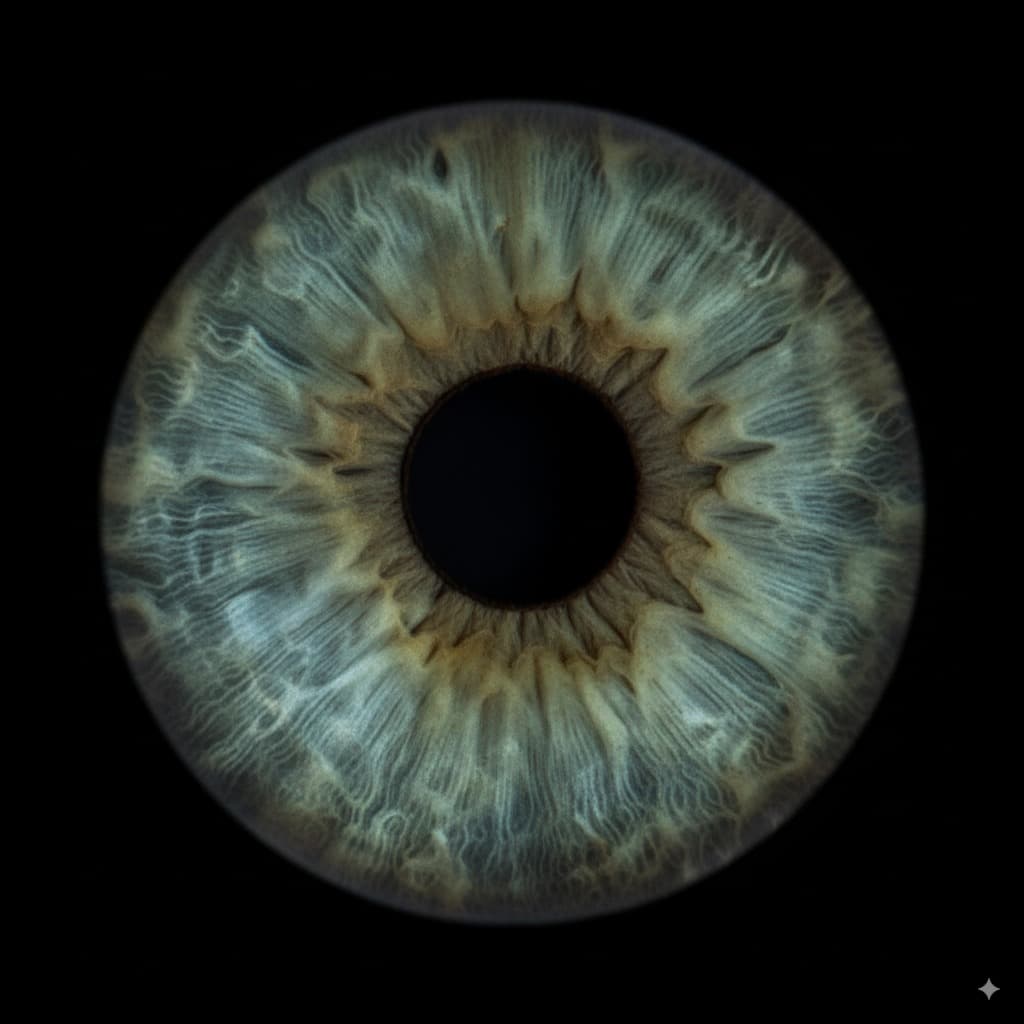
Green eyes are the rarest of the everyday eye colors — only about 2% of people worldwide have them. That scarcity is exactly why they get so much attention, and why so much about them is misunderstood. Here is the part that surprises most people: there is no green pigment in any human eye at all. The color is an optical trick. This guide explains how rare green eyes really are, the genetics behind them, why they look green, where they come from, and whether they actually change color.
What Are Green Eyes?
Green eyes are an iris color that sits between blue and hazel on the melanin scale. A true green iris is a fairly uniform green from the pupil out to the rim — that consistency is what separates green from hazel, which is always multi-tone. Within that, green ranges widely: bright emerald, soft sea-green, olive, and forest-green that leans almost hazel are all called green.
The single most important fact about green eyes is that there is no green pigment anywhere in the human iris. Eyes only ever contain two kinds of pigment: melanin (brown to black) and lipochrome (a yellowish pigment, sometimes called pheomelanin). Green is not a pigment you have — it is a color your eye perceives when a small amount of melanin and a trace of yellow lipochrome combine with the way light scatters inside the iris. We will unpack exactly how that works below.
How Rare Are Green Eyes?
Green eyes occur in approximately 2% of the world's population, which makes them the rarest of the commonly recognized eye colors. (Genuinely rarer shades exist — like the red or violet appearance linked to albinism — but those are medical, not standard colors.) Here is where green sits relative to the other major eye colors:
| Eye color | Approx. global share | Rarity |
|---|---|---|
| Brown | 55–79% | Most common |
| Blue | 8–10% | Common |
| Hazel | ~5% | Uncommon |
| Amber | ~5% | Uncommon |
| Gray | ~3% | Rare |
| Green | ~2% | Rarest (non-medical) |
The global 2% figure hides enormous regional variation. Green is overwhelmingly a Northern and Central European trait, and in its heartlands it is not rare at all. Ireland and Scotland have some of the highest rates in the world — by some estimates a large minority of people there have green or green-hazel eyes — and Iceland is frequently cited as having the highest concentration anywhere. Move outside Europe and green eyes become vanishingly uncommon: they are extremely rare across East Asia, South Asia, and Sub-Saharan Africa, where high-melanin brown eyes are the near-universal default.
One more reason the numbers wobble: green is constantly confused with hazel. Eyes that are mostly green with a hint of gold often get logged as hazel, and green-leaning hazel often gets logged as green, so different surveys count the same irises differently. For the full ranking of every eye color by rarity, see our rarest eye color guide.
Why Green Eyes Look Green
Since no green pigment exists, where does the color come from? It is a two-part recipe: structural blue plus a thin yellow overlay.
The first part is the same physics that makes blue eyes blue — and, for that matter, the same reason the sky is blue. When light enters an iris that has only a little melanin, the tissue scatters the shorter, bluer wavelengths back toward you more than the longer red ones. This is called Rayleigh scattering (closely related to the Tyndall effect you may see referenced). On its own, with very low melanin, that scattering produces blue.
The second part is what tips blue into green. Green irises carry a trace of lipochrome, a yellowish pigment, in the front layer of the iris. Lay a faint yellow film over scattered blue light and your visual system blends the two into green — exactly the way blue and yellow paint make green. The precise shade depends on the balance: a touch more melanin and lipochrome pushes toward olive or hazel-green, while very little of either keeps it bright and clear. There is also slightly more melanin in a green eye than a blue one, which is why green sits one notch up the pigment ladder from blue and just below hazel.
The Genetics Behind Green Eyes
Green eyes are a perfect illustration of why the "brown is dominant, blue is recessive" rule you learned in school is simply wrong. Eye color is polygenic — controlled by at least 16 genes working together, not a single dominant or recessive pair. Green, sitting on the boundary between blue and hazel, depends on landing an in-between combination of those variants.
The two genes that matter most are the same ones that steer every other eye color:
- OCA2 controls how much melanin your melanocytes produce in the iris. Green eyes have an intermediate level of OCA2 activity — more than the very low output that gives blue eyes, but well short of the high output that fills a brown iris with pigment.
- HERC2 sits right next to OCA2 and acts as its volume control. The well-known variant at position rs12913832 turns OCA2 down. People with green eyes often carry an intermediate or mixed genotype here, rather than the full low-pigment combination that produces blue.
Beyond OCA2 and HERC2, genome-wide studies have pinned down dozens of additional pigment genes — including SLC24A4, SLC45A2, TYR, and IRF4 — that fine-tune the exact shade and how much lipochrome ends up in the iris. Because green depends on this delicate, multi-gene balance rather than one signature mutation, it is harder to predict from DNA than brown-versus-blue. The forensic IrisPlex test makes this measurable. In a Slovenian validation study its prediction score (AUC) was 0.966 for blue and 0.913 for brown, but only 0.796 for the “intermediate” group that green and hazel eyes fall into — and in that sample not one of the 27 intermediate eyes was correctly called. Green is, on this evidence, the hardest common eye color to read from DNA. For the full walk-through, read our eye color genetics guide.
This also explains why two brown-eyed parents can have a green-eyed child, and why siblings end up with different colors. Each parent can quietly carry low-pigment variants without showing them; when a child inherits the right mix from both sides, green appears even though neither parent has it.
Where Do Green Eyes Come From?
Green eyes are concentrated in Northern and Central Europe. The highest rates cluster around the British Isles and the Nordic countries — Ireland, Scotland, and Iceland lead the world — with green and green-hazel also common across Scandinavia, the Netherlands, Germany, and into parts of Central and Eastern Europe. Pockets appear further afield too, including parts of Western and Central Asia such as Afghanistan and Pakistan, where lighter eye colors surface in specific populations.
The pattern tracks the same low-melanin gene variants that produced blue eyes, which spread through European populations over the last several thousand years. Green sits just up the pigment ladder from blue, so it concentrates in the same regions — which is also why it is almost absent in populations where brown eyes are universal.
Do Green Eyes Change Color?
The pigment in a green iris is stable in adulthood, but green eyes are famous for seeming to shift — sliding between green, gray, and hazel depending on conditions. Because green is a low-pigment color built partly on light scattering, it is unusually sensitive to its surroundings:
- Lighting. Cool, bright daylight boosts the scattered blue and makes green look clearer and more vivid. Warm indoor light dampens the blue and pulls green toward gray or gold.
- What you wear. Your brain judges color relative to what is nearby. A green or emerald top makes green eyes pop; a purple or rust top can make the same eyes read more vividly green or more hazel by contrast.
- Pupil size. When your pupil dilates, the iris compresses and the color looks deeper; when it constricts in bright light, more iris shows and the green looks lighter and brighter.
All of that is apparent change — an optical effect, not a change in pigment. Genuine, permanent change happens in two situations. The first is infancy: many babies are born with blue or gray eyes that darken over the first 6–12 months as melanin builds up, and green often settles in by age one to three (see our baby eye color timeline). The second is medical: a sudden, lasting change in one eye only, or a change paired with pain or vision problems, can signal conditions like Horner's syndrome or Fuchs heterochromic iridocyclitis, and certain glaucoma eye drops can darken iris color over time. If you notice a real, one-sided change, see an eye doctor.
Green vs hazel — the most common mix-up
Green and hazel are the two colors people confuse most, and the difference comes down to one thing: uniformity. Green is a single, fairly consistent color from pupil to rim. Hazel is multi-tone — it has a distinct brown or gold ring around the pupil that fades to green at the outer edge. The deciding feature is the center: if there is a warm brown core, it is hazel; if the green runs all the way in to the pupil, it is green. For the full breakdown of that boundary, including green-leaning hazel, see our hazel eyes guide.
How to Tell If You Have True Green Eyes
Because green overlaps with hazel, blue-green, and gray, it can be genuinely hard to self-diagnose. Here is a reliable, low-tech checklist:
- Use bright, neutral daylight. Stand near a window during the day, not under warm indoor bulbs, which mute green and exaggerate gold.
- Get close to a mirror. Look at your iris from a few inches away so you can read the actual color rather than an overall impression.
- Check the center. If the green runs all the way in to the pupil with no brown ring, that points to true green. A warm brown or gold center means hazel.
- Rule out blue-green and gray. If the color leans clearly blue with only a hint of green, it is blue-green, not green. If it looks colorless or silvery, it is gray.
The catch is that human eyes — including your own — are unreliable color judges, especially for a low-pigment color like green that changes with the light. The fastest way to settle it is pixel-level analysis. The MyEye AI Eye Color Identifier reads a single iris photo, separates the color zones, and tells you the exact color and sub-shade — including whether you're true green, green-hazel, or blue-green — plus how rare your specific shade is globally. It runs free in your browser with no signup, and there are also free iOS and Android apps if you'd rather scan from your phone.
Green Eyes Meaning & Symbolism
Because they are so uncommon, green eyes have collected a lot of cultural meaning over the centuries. In folklore and literature they are often tied to mystery, individuality, and even mischief — the phrase "green-eyed monster" for jealousy traces back to Shakespeare's Othello. Across many modern cultures green eyes are simply seen as striking and attractive, largely because they are rare.
It is worth being clear-eyed about this: these associations are cultural and symbolic, not scientific. Eye color does not determine personality, luck, or temperament (we unpack the symbolism of every color, and what science really says, in eye color meaning). What is genuinely true about green eyes is the biology — the low melanin, the light scattering, and the rarity — and that is remarkable enough on its own.
Frequently Asked Questions
How rare are green eyes?
About 2% of people worldwide have green eyes, making them the rarest of the common eye colors — rarer than gray (3%), hazel (5%), amber (5%), blue (8–10%), and brown (55–79%). They are far more common in Ireland, Scotland, and Iceland than the global average suggests.
What percentage of people have green eyes?
Roughly 2% globally. The figure is dramatically higher in parts of Northern Europe — a large minority of people in Ireland and Scotland have green or green-hazel eyes — and extremely low across East Asia, South Asia, and Sub-Saharan Africa, where brown eyes dominate.
Why are green eyes green?
There is no green pigment in the human eye. Green comes from low melanin scattering blue light (Rayleigh scattering) combined with a trace of yellow lipochrome layered on top. Blue plus yellow reads as green — the exact shade depends on how much melanin and lipochrome are present.
What causes green eye color genetically?
Green is polygenic — controlled by many genes together. OCA2 sets how much melanin the iris makes and HERC2 switches it up or down; green needs an in-between melanin level, more than blue but much less than brown, with genes like SLC24A4, TYR, and SLC45A2 fine-tuning the shade.
Do green eyes change color?
The pigment doesn't change in adults, but green eyes can look like they shift between green, gray, and hazel depending on lighting, clothing, and pupil size — an optical effect. Many babies' eyes also turn green over the first one to three years as melanin builds up. A real, lasting change in one eye should be checked by an eye doctor.
What's the difference between green and hazel eyes?
Green eyes are one uniform green across the whole iris. Hazel eyes have a distinct brown or gold ring around the pupil that fades to green at the edge. If the green runs all the way in to the pupil, it's green; if there's a warm brown center, it's hazel.
Sources & Further Reading
- Cleveland Clinic. (2024). Eye Colors: Hazel, Green, Amber, Blue, Grey & Brown.
- Simcoe, M. et al. (2021). Genome-wide association study in 195,000 individuals identifies 50 previously unidentified genetic loci for eye color. Science Advances.
- Kastelic, V., Pośpiech, E., Draus-Barini, J., Branicki, W., & Drobnič, K. (2013). Prediction of eye color in the Slovenian population using the IrisPlex SNPs. Croatian Medical Journal.
- MedlinePlus Genetics. Is eye color determined by genetics? U.S. National Library of Medicine.
- American Academy of Ophthalmology. Iris Anatomy and Function.
Related Reading
- Blue Eyes: How Rare They Are & Why There Is No Blue Pigment
- Brown Eyes: How Common They Are, Genetics & Shades
- Gray Eyes: How Rare They Are & Why They Are Not Just Blue
- Hazel Eyes: How Rare They Are, Genetics & Why They Change
- Amber Eyes: The Rare Golden Iris Explained
- The Rarest Eye Color: 2026 Definitive Ranked Guide
- Eye Color Genetics: What Actually Determines Your Eye Color
- What Color Are My Eyes? Identify Your Eye Color with AI
- AI Eye Color Identifier (the tool)
Written by the MyEye - AI Eye Scanner & Iris Analyzer Team. For educational and entertainment purposes only. Not medical advice. Population percentages cited are global averages drawn from peer-reviewed studies and may vary by region and methodology.
Last updated: June 27, 2026.